Of all the pest threats facing Singapore properties, subterranean termites consistently rank among the most destructive. They are responsible for the majority of serious structural damage reported across HDB flats, landed homes, shophouses, and commercial properties in Singapore, and unlike most other household pests, their presence often goes undetected until significant damage has already occurred.
Most homeowners and property managers who call a pest control company about a termite problem have one central concern: they want it dealt with properly. What they are typically unsure about is what treatment they need, how the process works, and what to expect from start to finish. That uncertainty is entirely understandable, and it is also not something property owners should have to resolve on their own. Identifying the appropriate subterranean termites treatment is the professional’s responsibility, not the homeowner’s.
This article walks through exactly what happens from the moment you contact PestClinic to the point where your termite problem is properly assessed and treated. The aim is to remove the guesswork from the process, because understanding each step makes the decision to act considerably easier.
Why Subterranean Termites Cannot Be Handled With DIY
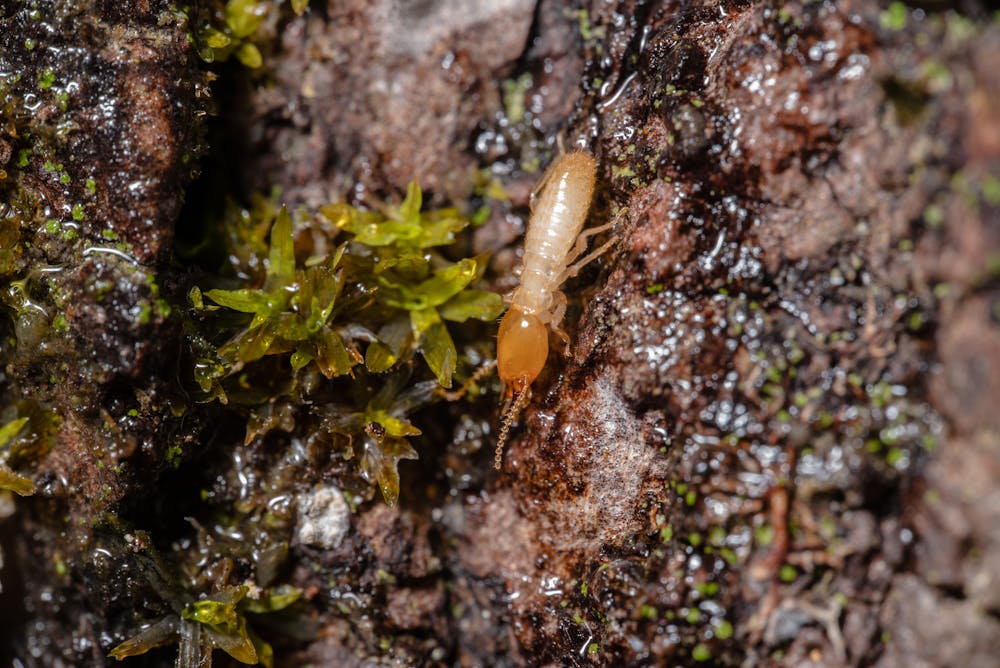
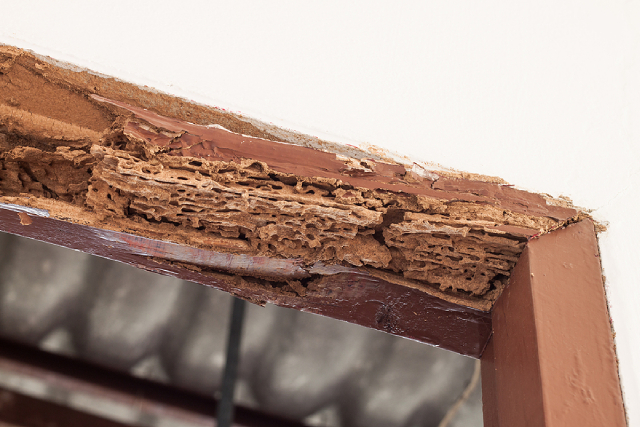
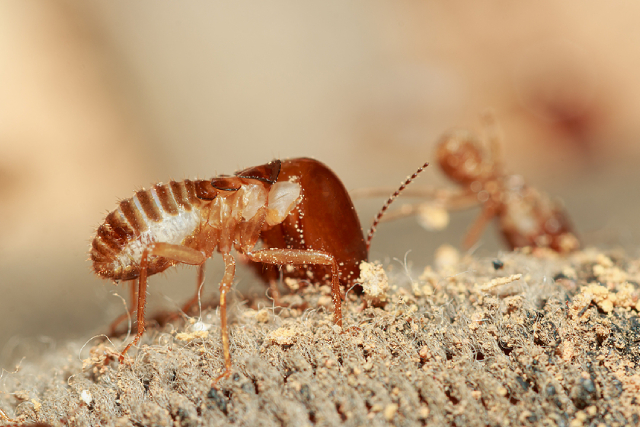
Subterranean termites nest underground. The colony, which may number in the hundreds of thousands, lives beneath or around the structure, not inside the walls or timber where the damage is visible. Termites travel from that underground nest into the building through concealed mud tubes, feeding on timber from the inside while leaving the outer surface largely intact. What the homeowner sees, hollow-sounding flooring, bubbling paint, or a softening skirting board, is never where the colony actually is.
This is the core limitation of termite traps, over-the-counter sprays, and hardware-store products: they address only surface activity. A spray applied to a mud tube or an affected section of wall may eliminate the termites it contacts directly, but it does not reach the underground colony, and it does not affect the queen. Within weeks, foraging activity resumes from the same source, and the cycle continues.
A mature subterranean termite colony cannot be brought under control by reducing the number of workers visible at the surface. Effective termite control requires eliminating the colony at its source, and that is achievable only through professional methods that reach and affect the population underground.
Which raises the practical question: how do you know when the situation on your property has crossed the threshold for genuinely needed professional intervention?
Signs You Should Call a Professional

Subterranean termite activity is often more identifiable than homeowners expect, once you know what to look for. The signs below indicate that professional assessment is warranted. Any one of them is sufficient reason to make the call.
- Mud tubes along walls, skirting boards, foundations, or pipes. Subterranean termites build these narrow, pencil-width tunnels to travel between soil and structure while staying protected from open air. They are the most reliable indicator of active subterranean termite presence and should never be dismissed.
- Hollow-sounding timber when tapped. Tap along the flooring, door frames, skirting boards, and structural beams. Because subterranean termites feed from the inside out, timber may sound hollow or papery well before any external damage becomes visible.
- Bubbling or uneven paint with no obvious moisture source. Paint that appears to be lifting or blistering on walls or ceilings, without a clear water leak nearby, can indicate termite activity behind the surface.
- Discarded wings near windowsills or light fittings. Termite swarmers shed their wings shortly after flight. Finding clusters of small, translucent wings indoors, particularly after a warm or humid evening, indicates that a swarm has occurred nearby and that a colony may be forming.
- Timber damage that has appeared or worsened quickly. Wood that has become soft, buckled, or structurally weakened in a short period, without an obvious cause such as a water leak, warrants investigation.
- A previous termite treatment has not held. If termite activity has returned after a prior treatment, this strongly suggests that the original approach did not adequately address the colony, or that reinfestation has occurred through a different access point.
A professional termite inspection will confirm whether subterranean termites are present, how far the infestation has progressed, and what anti-termite treatment properties are typically required in your situation. Here is exactly what that process looks like from the first call through to post-treatment follow-up.
Step 1: The Initial Call and What to Mention
When you contact PestClinic, the initial conversation is straightforward. There is no pressure to commit to a treatment package before anything has been assessed. The purpose of the call is to understand your situation and arrange a site visit.
To make that conversation as efficient as possible, it helps to have a few details ready:
- Where have you noticed signs of activity or damage? Even approximate descriptions, such as “along the skirting board in the master bedroom” or “near the base of the staircase,” help the technician prepare for the inspection.
- How long have you been noticing the signs? A rough timeline, whether a few days or several months, gives useful context for gauging infestation progression.
- Your property type. Whether it is an HDB flat, a terrace house, a landed property, an F&B outlet, or a commercial space affects the scope and approach of both the inspection and any subsequent treatment.
- Whether any previous termite treatment has been carried out. If so, noting when it was done and by whom is worth mentioning.
None of this information commits you to anything. The recommendation, whether it is termite baiting treatment, a chemical barrier approach, or a combination of methods, follows from what the technician finds onsite, not from what is discussed over the phone. That determination happens at the next step.
Step 2: The Professional Inspection
The site inspection is where the actual assessment takes place. A PestClinic NEA-certified technician visits the property and conducts a thorough review before any treatment decision is made.
The inspection covers the following:
- Locating mud tubes and active workings. The technician checks the interior and perimeter of the property for termite mud tubes, damaged timber, frass, and other indicators of active infestation.
- Identifying entry points. Subterranean termites can enter through foundation cracks, expansion joints, pipe penetrations, and gaps in flooring or concrete slabs. Locating these access points is essential for designing an effective treatment plan.
- Assessing the extent of infestation. The technician maps the extent of activity across the property, including areas that may not yet show obvious external damage. Visible signs rarely represent the full scope of an infestation.
- Confirming the species. Not all termite damage is caused by subterranean termites. Confirming that the infestation is subterranean rather than drywood is a necessary step before selecting a treatment, because the two species require fundamentally different approaches.
Concealed areas are inspected where accessible, including wall cavities, under-floor spaces, pipe penetrations, and roof voids. Termite activity does not always present in visible or easy-to-reach locations, and a thorough inspection accounts for this.
One important point to note: PestClinic does not offer a standalone free onsite assessment. The inspection and treatment are carried out during the same visit, with treatment proceeding. If treatment is not adopted following the inspection, an inspection fee will apply.
At the end of the visit, the technician will explain what was found and walk through a treatment plan specific to the property and the identified infestation.
Step 3: The Treatment Plan and What It May Involve
PestClinic’s treatment recommendation is based on the specific findings from the inspection, not a standard package applied uniformly across properties. The method selected, or combination of methods, will reflect the species confirmed, the infestation’s extent and location, the property’s construction type, and where active workings have been identified.
Depending on the inspection outcome, a subterranean termites treatment Singapore plan may involve one or more of the following:
Termite Baiting System
A termite baiting system involves strategically placing bait stations at or around the perimeter of the property, in locations where foraging worker termites are likely to encounter them. Workers consume the bait and carry it back to the colony through natural social feeding behaviour. Over time, the active ingredient spreads through the population, progressively eliminating the colony at the source, including the queen.
This treatment approach does not produce immediate visible results, and that is by design. Because the termite baiting system targets the colony rather than surface activity, results build over weeks as the bait disperses through the population. It is a sustained, colony-focused approach best suited to properties where long-term management and ongoing monitoring are priorities.
Chemical Barrier Treatment
Where a faster-acting perimeter solution is required, chemical barrier treatment may be recommended. Also referred to as termite barrier treatment or termite chemical barrier, this involves applying liquid termiticide to the soil surrounding and, where possible, beneath the structure. The treated zone creates a continuous barrier that subterranean termites cannot cross without lethal exposure.
For the barrier to remain effective, coverage must be continuous and unbroken. Even minor gaps in the treated zone can allow termites to bypass it entirely. In Singapore’s environment, factors including rainfall, soil movement, and landscaping changes can affect barrier longevity over time, which is why follow-up monitoring is recommended even after a successful application.
Termiticide Application to Active Workings
In cases where the inspection identifies active mud tubes or confirmed infestation sites, termiticide can be injected directly into these areas for immediate localised effect. This method is typically used alongside a broader approach, such as a baiting system or chemical barrier, rather than as a standalone treatment. It is particularly useful for addressing concentrated activity while the longer-term method takes hold.
Before work begins, the technician will explain the recommended approach, the preparation required from the household, and the expected timeline and outcome. That preparation is worth understanding in advance.
Step 4: Preparing Your Property for Treatment
Preparation requirements vary depending on the selected treatment method, and the technician will provide specific instructions beforehand. In general, the following applies:
- Provide access to identified areas. This may mean moving furniture away from skirting boards, clearing stored items from affected rooms, or making under-floor or ceiling access points reachable. Restricted access to key areas limits treatment coverage and can reduce effectiveness.
- Vacate treated areas for the required period. The duration will vary depending on the products applied. The technician will specify clearly which areas to vacate and for how long before work begins.
- Do not disturb bait stations after installation. Moving, opening, or applying other products near termite baiting stations resets the process and significantly reduces the effectiveness of the baits. Stations should be left exactly as placed until the technician’s follow-up visit.
- Avoid applying independent pest control products in treated areas. Using sprays, surface treatments, or any other products in areas covered by the professional termite control plan during the treatment period can compromise the efficacy of the methods being used.
Step 5: What to Expect After Treatment

Results vary by method, and understanding why helps homeowners recognise that treatment is working as intended even when changes are not immediately visible.
If a termite baiting system has been installed, a visible reduction in activity builds over weeks, not days. Worker termites must locate the stations, begin feeding, and carry the bait back to the colony before population decline becomes apparent. This timeline is normal, and it does not indicate that the treatment is failing or insufficient.
If a chemical barrier or termiticide application has been carried out, results are faster and more localised. Termites that contact treated zones are affected relatively quickly. Follow-up monitoring is still required, however, to confirm that colony activity has been fully eliminated and that no untreated access points remain active.
Some continued termite activity in the days immediately following treatment is normal. Termites already in transit when treatment was applied may continue to appear briefly before encountering treated zones. This typically resolves within the first few days and should not be interpreted as treatment failure.
PestClinic follows up after treatment to assess effectiveness, monitor bait stations as applicable and address any residual or renewed activity. If new mud tubes or fresh signs of damage appear before the scheduled follow-up, report this promptly rather than waiting. Early reporting allows the technician to determine whether the activity is part of the expected post-treatment phase or requires additional intervention.
Why Act Now Rather Than Wait
Every week a subterranean termite colony goes untreated, it grows, and the structural damage it causes compounds accordingly. A colony that can be addressed effectively today may require significantly more extensive treatment in six or twelve months, once feeding has progressed into additional structural timber. The cost of professional termite control, whether that involves a baiting system, a chemical barrier, or a combination approach, is a fraction of what structural repair typically costs once load-bearing timber, flooring frameworks, or roof structures have been compromised.
Delay also increases the risk of the infestation spreading beyond its original point. In closely connected structures such as terrace houses, shophouses, and certain commercial layouts, an untreated colony can extend into adjacent units, turning a contained problem into a considerably more complex one.
The first step requires nothing more than making contact. There is no requirement to know what treatment is needed or to have made any decisions in advance. PestClinic’s technicians handle the assessment and recommendation. From that point, the homeowner or property manager is fully informed to proceed.
If you suspect subterranean termite activity in your home or offices, contact PestClinic to arrange a professional inspection and anti-termite treatment. With 30 years of combined pest control experience in Singapore, PestClinic delivers one of the best behaviour-based termite control plans, designed to address the problem at its source, not just its surface.