Few pest problems are as quietly demoralising as bed bugs. You strip the bed, wash everything on the hottest setting, and wake up days later to the same row of bites along your arm. By the time most people in Singapore start searching for professional bed bug treatment in Singapore, the sprays and the laundry cycles are already behind them, and the problem has outlasted every attempt to deal with it quietly.
If that describes where you are, you are not doing anything wrong. Bed bugs are among the most resilient pests we deal with, and they are built to survive exactly the measures most households reach for first. A single application of anything rarely resolves an established infestation. What works is a coordinated programme that accounts for where bed bugs hide, how they breed, and how they survive, which is precisely what professional pest control is designed to deliver.
This guide explains how to identify a bed bug problem, why it can escalate, how to get rid of bed bugs for good, and how to book an inspection with us so you know what to expect at every step.
Why Bed Bug Infestations Happen in Singapore
Bed bugs do not arrive because a home is dirty. They arrive because they are carried in, and Singapore offers them a near-ideal environment to spread once they do. The combination of frequent international travel, high-density living, and warm indoor climates means that a bed bug picked up in one location can establish itself in a new location within weeks.
The point was made vividly when a video of a severe bed bug infestation at an AMK Hub seating area went viral, spreading through local social feeds and prompting a wave of concern from residents who suddenly recognised the signs in their own homes. Cases like that are a reminder that bed bugs are not confined to neglected spaces. They turn up in well-kept flats and busy public areas alike.
They travel by hitchhiking. Luggage returning from a trip, second-hand furniture brought in from a resale platform, delivery packages, and even clothing can all carry bed bugs or their eggs into a property. Once inside, they settle into the seams, joints, and crevices nearest to where people sleep or sit for long periods.
In Singapore, infestations are most commonly reported in:
- HDB flats and private condominiums, where shared walls and close proximity can allow spread between units.
- Serviced apartments and hotels, where high guest turnover constantly introduces new arrivals.
- Hostels, dormitories, and staff accommodation, where shared sleeping spaces significantly increase the risk.
What makes bed bugs escalate so quickly is a combination of biology and behaviour. They reproduce rapidly, with a single female capable of laying hundreds of eggs over her lifetime. They disperse across multiple hiding zones rather than clustering in one obvious spot. And many populations have developed resistance to the active ingredients in over-the-counter products, which is why retail sprays so often fail to make a lasting difference. Left unaddressed, a problem that started in one mattress can spread to the bed frame, adjacent furniture, and neighbouring rooms before it is ever taken seriously.
How Does a Bed Bug Look Like? Quick Identification Before You Book
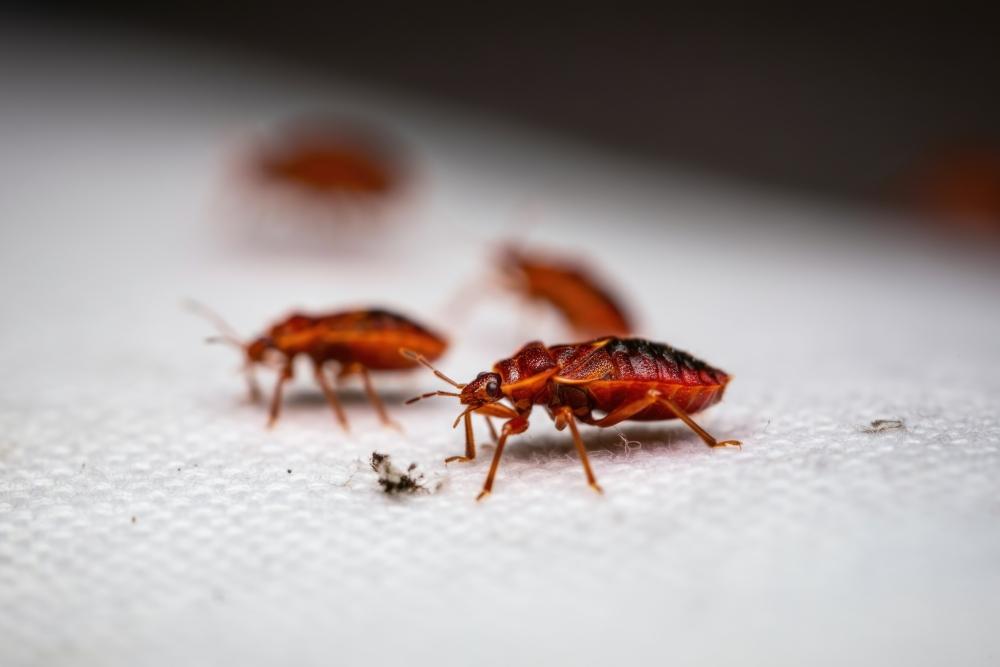
Before booking treatment, it helps to confirm you are actually dealing with bed bugs and not another pest. Knowing how a bed bug looks like makes the difference between an accurate report to your technician and a wasted callout for the wrong problem.
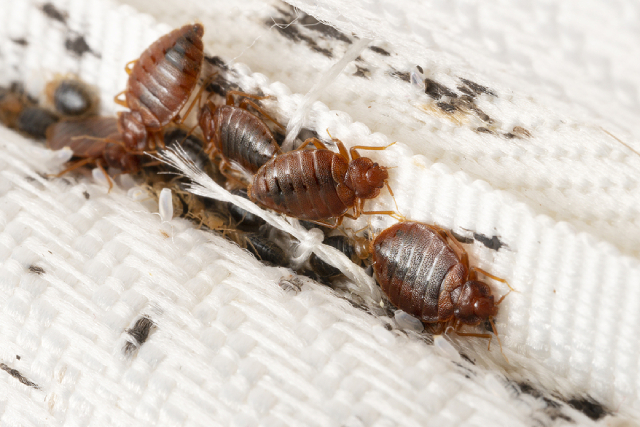
Adult bed bugs are roughly the size and shape of an apple seed, around 5mm to 7mm long. When unfed, they are flat, oval, and rusty brown. After feeding, they swell and darken to a deeper reddish brown, becoming rounder and more visible. They have six legs, two antennae, no wings, and a clearly segmented abdomen.
Nymphs, the immature stage, are smaller, paler, and almost translucent. They are easy to miss entirely until shortly after a feed, when the blood they have taken makes them briefly visible.
Eggs are pearl white and about the size of a pinhead, resembling tiny poppy seeds. They are usually laid in clusters tucked into concealed crevices, which is part of why infestations are so often underestimated.
Bed bugs are frequently mistaken for other pests, and that confusion matters because it leads people to book the wrong treatment. Carpet beetles, fleas, ticks, and cockroach nymphs are all common misidentifications, and each calls for a different fix. If the culprit turns out to be roaches rather than bed bugs, our cockroach pest control service is what you want instead. We have covered this in more detail in our guide on identifying 3 common mattress pests.
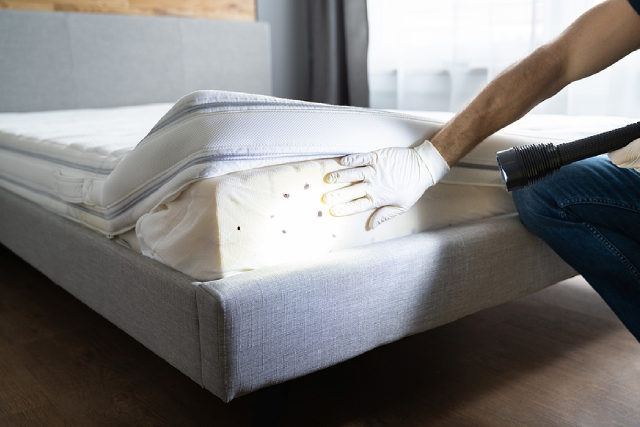
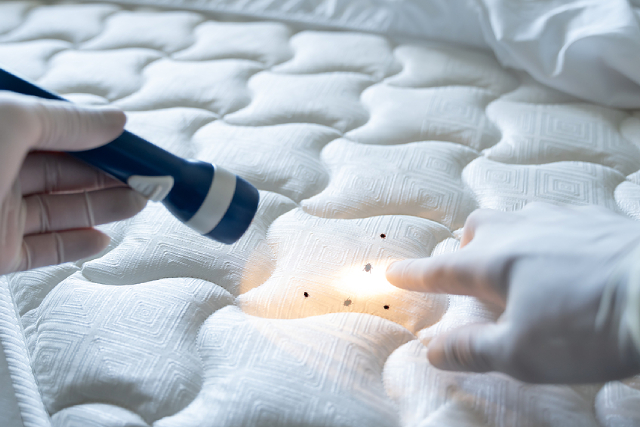
Before you call, do a quick self-check. The most reliable places to look are mattress seams and piping, the joints of the bed frame and headboard, and along skirting boards near the bed. If you find anything, photograph it clearly. A few good images of the insect, any stains, or shed skins give your technician a head start in confirming the species and judging the scale before the inspection even begins.
Signs It is Time to Book Professional Bed Bug Pest Control
Bed bugs leave a recognisable trail of evidence, and most people notice several of these signs before they accept that the problem warrants professional help. Use the following as a checklist:
- Bites appearing in straight lines or tight clusters on exposed skin, often noticed first thing in the morning.
- Rust-coloured stains on bedsheets, mattresses, or upholstery, left by crushed bed bugs or their faecal matter.
- Translucent shed skins along mattress seams, in bed frame joints, or in furniture crevices.
- A musty, sickly-sweet odour in the bedroom that grows stronger as the infestation builds.
- Live bed bugs or pearl-white eggs visible in mattress folds, particularly along the piping.
- Bites or sightings that continue despite changing bedding, washing linens, and applying retail sprays.
- Activity spreading beyond the bed into adjacent furniture, walls, electrical fittings, or other rooms.
Here is the part worth being honest with yourself about. Many people delay because no single sign feels serious enough on its own, and the early evidence is easy to attribute to something else. But any one of these signs is sufficient reason to stop relying on DIY products and bring in a professional exterminator in Singapore. The infestation does not wait while you decide whether it qualifies, and the longer it runs, the more involved the treatment becomes.
Why DIY Methods Rarely Eliminate Bed Bugs
For a stray insect or two, retail products can seem to do the job. The trouble begins when the problem is already established, because that is where over-the-counter methods consistently fall short.
The first reason is resistance. Many bed bug populations have developed measurable resistance to the active ingredients in common retail insecticides. A spray that kills the bugs you can see often has little effect on the wider population, which is why the bites return within days, even when the visible insects appear to be gone.
The second reason is reach. Surface sprays treat surfaces. Bed bugs shelter deep in mattress seams, bed frame joints, furniture crevices, and wall voids, well beyond the reach of a household spray. Treating what is visible leaves the bulk of the population untouched and free to repopulate.
The third reason is the eggs. Bed bug eggs are particularly resistant to standard insecticides, and they continue to hatch over weeks. Even a treatment that suppresses the adults will be undone as new nymphs emerge from eggs that were never affected. This is exactly why professional treatment is structured as a programme with a planned follow-up rather than a single visit, a point we return to below.
Some common DIY responses actively make things worse:
- Discarding an infested mattress without sealing it first can spread bed bugs through corridors, lifts, and into neighbouring units on the way out.
- Using foggers or bug bombs, which tend to scatter bed bugs deeper into walls and adjacent rooms rather than killing them.
- Repeated retail spraying, which suppresses surface activity just enough to mask the problem while untreated populations rebuild.
- Relying on essential oils, diatomaceous earth, or other home remedies that have limited evidence of working against an established infestation.
The hidden cost of waiting is the most important point of all. A single surviving fertilised female can rebuild a population within weeks, undoing months of effort and expense. We have written separately about the dangers of over-the-counter pest control products, and bed bugs are a clear example of why surface-level solutions tend to cost more in the long run than they save.
What Professional Bed Bug Treatment in Singapore Actually Involves
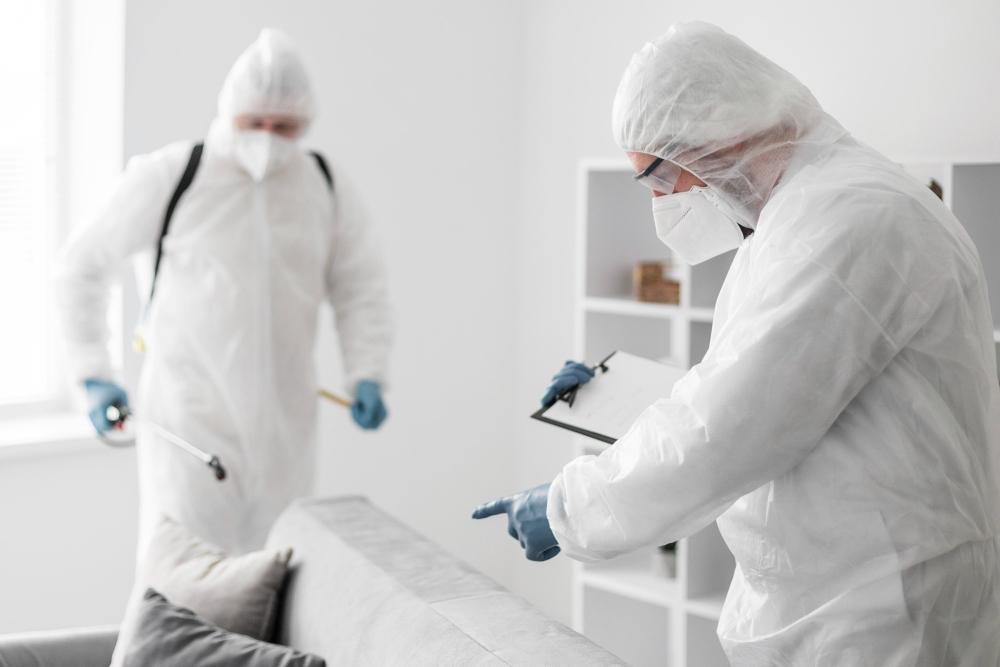
Professional bed bug treatment does not start with a spray. It starts with an inspection, because bed bug behaviour, hiding patterns, and life stages vary considerably from one infestation to the next, and the right approach can only be chosen once those factors are understood.
Effective treatment then combines several techniques to reach every life stage and every concealment zone within the property. Our bed bug control services are built around the following methods:
- Detailed inspection: Using flashlights and detection tools, our technician locates live bed bugs, eggs, and harbourage zones across the affected areas, building an accurate picture of where the population is concentrated and how far it has spread.
- Targeted residual spraying: We apply residual insecticide to beds, furniture, skirting boards, and the cracks and crevices where bed bugs shelter. This leaves lasting protection on treated surfaces so that bugs moving through them later are also affected.
- Mist fumigation: A fine insecticide mist penetrates wall voids, deep furniture joints, and tight crevices that traditional sprays cannot reach, reaching hidden bed bugs and eggs that surface treatment alone would leave behind.
The reason these are combined is simple: no single method reaches everything. The right mix depends on the specific infestation profile, which is why we do not apply a fixed package. We treat the root cause, the concealed population and the conditions allowing it to persist, rather than only the activity that happens to be visible on the day.
How to Book Bed Bug Pest Control with PestClinic
Booking treatment is simpler than most people expect, and you do not need to diagnose the problem yourself before you reach out. The process moves in three stages.
Step 1: The Initial Enquiry
When you contact us, the first conversation involves understanding your situation. We will ask a few practical questions to gauge the scale and arrange a suitable time to visit.
It helps to have a few details ready: where you have noticed bites or sightings, how long the issue has been going on, your property type, anything you have already tried, and roughly how large the affected area is. With that, we can arrange a site inspection at a time that suits your household or business.
Step 2: The Professional Inspection
An NEA-licensed PestClinic specialist will visit and conduct a thorough inspection before any treatment decision is made.
The inspection involves locating active harbourage zones, identifying which life stages are present, assessing how far the infestation has spread across rooms, and confirming that you are dealing with bed bugs rather than another biting pest.
At the end, our technician will explain what they have found and recommend a treatment plan specific to your property.
Step 3: The Treatment Plan and Quote
The plan is built around what the inspection found. Depending on the situation, it may combine inspection, targeted spraying, and mist fumigation. The quoted cost reflects the methods required, the number of rooms affected, the severity of the infestation, and whether follow-up sessions are likely to be needed.
Before anything proceeds, our technician walks you through what the treatment will involve, what you will need to prepare beforehand, and what outcome and timeline you can reasonably expect.
How to Prepare Your Home Before Bed Bug Treatment
Preparation has a direct effect on results. The more thoroughly our technicians can access the infested zones, the more complete the treatment will be, so a well-prepared property genuinely improves the outcome.
Before treatment day, we generally recommend the following:
- Wash all bedding, linens, curtains, and washable fabrics on the highest safe temperature setting, then dry them on high heat.
- Bag and seal any items that cannot be washed so they can be treated or laundered separately.
- Clear clutter from under the bed, around bedroom furniture, and along skirting boards.
- Vacuum the affected rooms thoroughly, then seal the vacuum bag inside an outer bag and dispose of it immediately.
- Shift furniture slightly away from the walls where requested, so crevices and skirting can be treated properly.
- Remove or cover food, toiletries, and exposed kitchenware in the areas due for treatment.
- Arrange for pets and aquariums to be removed or properly covered during the visit.
What to Expect After Your Bed Bug Treatment
Setting expectations matters here because normal post-treatment activity is easily mistaken for failure. Knowing what is typical will save you a great deal of unnecessary worry.
Some bed bug activity in the first few days after treatment is expected. Residual treatments and the disturbance of the inspection itself tend to flush bed bugs out of hiding, so you may actually see more of them briefly before numbers fall. Bites may also continue for a short while, as bugs already on a host or freshly hatched from eggs encounter the treated surfaces.
A noticeable reduction in sightings typically follows within one to two weeks of the initial treatment. For moderate to severe infestations, a follow-up session is standard practice. Bed bug eggs hatch over weeks, and a second targeted application timed to catch newly emerged nymphs is often what brings the infestation to a close.
Beyond the treatments themselves, ongoing monitoring plays a real role in confirming success. Regular checks, mattress encasements, and a degree of household vigilance all help verify that the population has truly been eliminated rather than merely suppressed.
What Affects the Cost of Professional Bed Bug Treatment
It is reasonable to want a sense of cost before you commit, and the honest answer is that bed bug treatment is priced according to what the job requires. There is no fixed figure, because no two infestations are the same.
The main factors that influence the price are:
- The number of rooms requiring treatment.
- The severity of the infestation and which life stages are present.
- The treatment methods needed, whether targeted spraying, mist fumigation, or a combination.
- Whether follow-up sessions and ongoing monitoring are anticipated.
- Whether the property is residential, commercial, or hospitality, each of which carries different requirements.
It is worth being cautious about the cheapest quote. An incomplete treatment that fails to eliminate the population almost always costs more in the end, through repeat callouts, replaced furniture, and, for businesses, the reputational damage of a problem that keeps resurfacing in front of customers.
This is also why we price each job on its actual findings rather than a generic estimate. A professional inspection is the only reliable basis for an accurate quote, because it tells us what we are genuinely dealing with rather than what we assume from a phone description.
How to Prevent Bed Bugs from Returning
Eliminating an infestation is only half the work. In an environment with as much movement as Singapore, preventing reintroduction is just as important, and a few habits make a measurable difference.
- When travelling, inspect hotel rooms before unpacking by checking mattress seams, headboards, and luggage racks.
- Keep luggage off the bed and floor in unfamiliar accommodation, and wash all clothing on a hot wash as soon as you return home.
- Examine any second-hand furniture, mattresses, or clothing carefully before bringing it indoors.
- Fit mattress encasements, which deny bed bugs their favoured harbourage along the seams and make any future activity far easier to spot.
- Vacuum mattresses, carpets, and upholstery regularly, paying close attention to seams and edges.
- Seal cracks in walls, skirting boards, and furniture joints to reduce the hiding spots available.
- Keep bedroom clutter down, since fewer undisturbed nooks means fewer places for bed bugs to settle.
In higher-risk environments such as hotels, hostels, and dormitories, where the constant turnover of people inherently increases the risk of reinfestation, routine professional inspections are a sensible safeguard.
Why Choose PestClinic for Bed Bug Treatment in Singapore
When you are choosing who to trust with your home or business, experience and accreditation matter. Here is what we bring to a bed bug problem:
- Over 30 years of combined experience across residential, commercial, and hospitality settings, which means we have seen the full range of infestation types and know how each behaves.
- NEA-licensed specialists trained to identify bed bug activity accurately, locate harbourage zones, and apply targeted treatments safely and efficiently.
- A coordinated treatment approach that combines detailed inspection, targeted residual spraying, and mist fumigation, matched to your specific infestation profile rather than forced into a fixed package.
- Eco-friendly options for sensitive environments where reducing chemical use is a priority.
- Follow-up inspections and monitoring built into the process to confirm full elimination and guard against recurrence.
Our entire approach is built around reaching the concealed population that sustains an infestation. You can see the full range of our pest control services if you would like a sense of how we work across other pests.
Book Your Bed Bug Treatment with PestClinic Today
Bed bug infestations escalate quickly, and the cost of waiting is rarely just inconvenience. Early professional intervention means a smaller population, fewer affected rooms, and simpler, less expensive treatment than if the same problem is left to grow for another month.
You do not need to know which treatment method your property requires before you book. That is what the inspection is for. The most useful thing you can do today is the lowest-commitment step available: arrange a professional inspection to confirm the extent of the infestation and receive a treatment plan tailored to your property, with no obligation until you have reviewed the recommendation.
Get in touch with PestClinic today to schedule a bed bug inspection, or message us directly on WhatsApp. You can also reach us by phone at +65 6397 5677 or by email at info@pestclinic.com.sg. It is the practical first step toward reclaiming a comfortable, bed bug-free property.