By the time most people start looking seriously into pest control for flies, the aerosol can and the electric zapper are already in the cupboard. You have cleared the bins, wiped the surfaces, and watched the flies return within a day or two. Treating flies as a housekeeping problem is a reasonable instinct, and for a stray fly or two it usually works. What it does not touch is where the flies are actually breeding.
A fly is not simply an irritation that lands on the rim of a glass and moves on. It is a mechanical vector, picking up bacteria from refuse and decaying matter and depositing it on the next surface it touches, including food and preparation areas. In a home, that is a hygiene concern. In an F&B outlet, a food processing facility, or any commercial kitchen, a visible fly problem carries real consequences for hygiene grading, customer confidence, and in some cases regulatory standing. This is the point where most people start searching for a fly exterminator rather than another can of spray. Our fly pest control services cover the full breakdown of health risks and treatment methods. This guide focuses on why fly infestations happen, how to tell when DIY isn’t enough, and what actually happens once you book.
Why Fly Infestations Are a Serious Issue in Singapore
It is easy to treat houseflies as one of the pests we simply live with. They appear around the bin chute, hover near the fruit bowl, and most of us reach for a swat and move on. For the occasional fly drifting in through an open window, that response is reasonable enough. The trouble begins when sightings become routine, because persistent fly activity is rarely random. It points to a breeding source nearby, and that is the point at which pest control for flies becomes a matter of health rather than housekeeping.
The reason flies warrant more attention than their size suggests comes down to how they feed and where they travel.
- They move between faeces, decomposing organic matter, and rubbish before settling on food and preparation surfaces, transferring contaminants with every landing.
- Pathogens carried by mechanical transfer include Salmonella, E. coli, Shigella, and a range of intestinal parasites.
- A single house fly can carry millions of microorganisms on its body and legs.
- Warm, humid conditions across Singapore allow flies to breed all year, so fly pressure does not ease seasonally the way it does in temperate climates.
- Dense urban living, shared bin chutes, and high-traffic food environments give flies constant access to both breeding sites and food sources.
For commercial operators, the stakes are higher. A fly problem is not a private inconvenience when it happens in front of customers and inspectors.
- F&B outlets risk hygiene grade impact and customer complaints the moment fly activity becomes visible during service.
- Food processing and industrial facilities face contamination that can compromise entire production batches, not just a single meal.
- Offices and retail spaces deal with the quieter cost of staff discomfort and the impression left on anyone who walks in.
Across all of these, the pattern holds. The visible flies are the symptom, and lasting control depends on reaching the source. That is where professional treatment separates itself from anything bought off a shelf.
Common Types of Flies Found in Singapore Properties
Not every fly problem is the same problem. Different species breed in different places, respond to different treatments, and signal various underlying issues. Identifying the species correctly is the foundation of effective fly pest control, because the treatment that clears a fruit fly problem in a bar will do little for a drain fly issue in a commercial kitchen.
House Flies (Musca domestica)
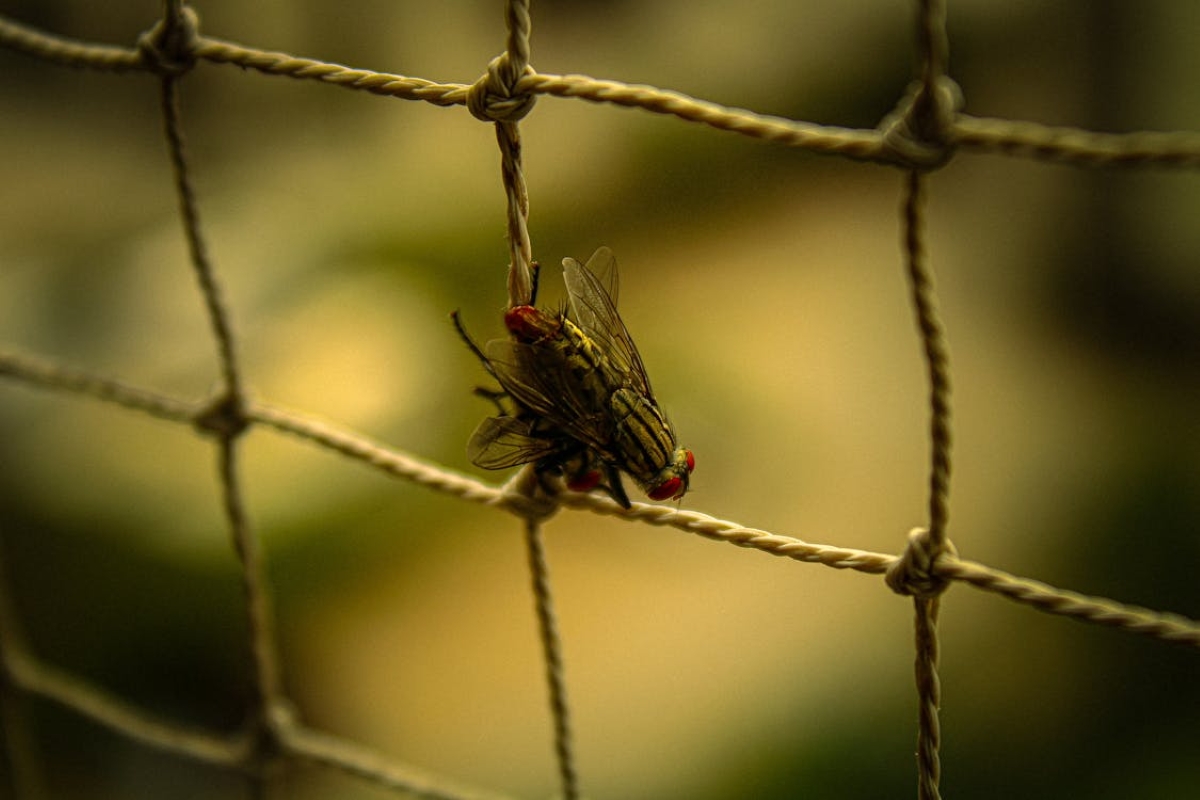
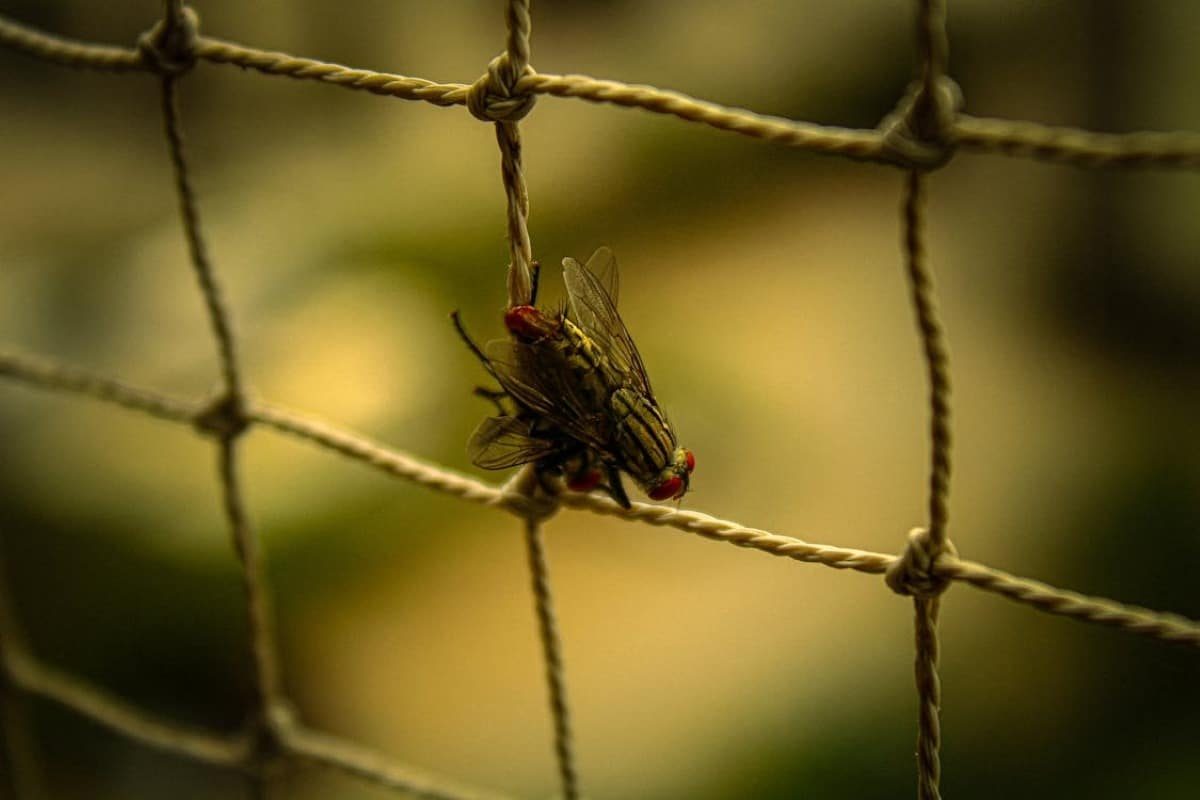
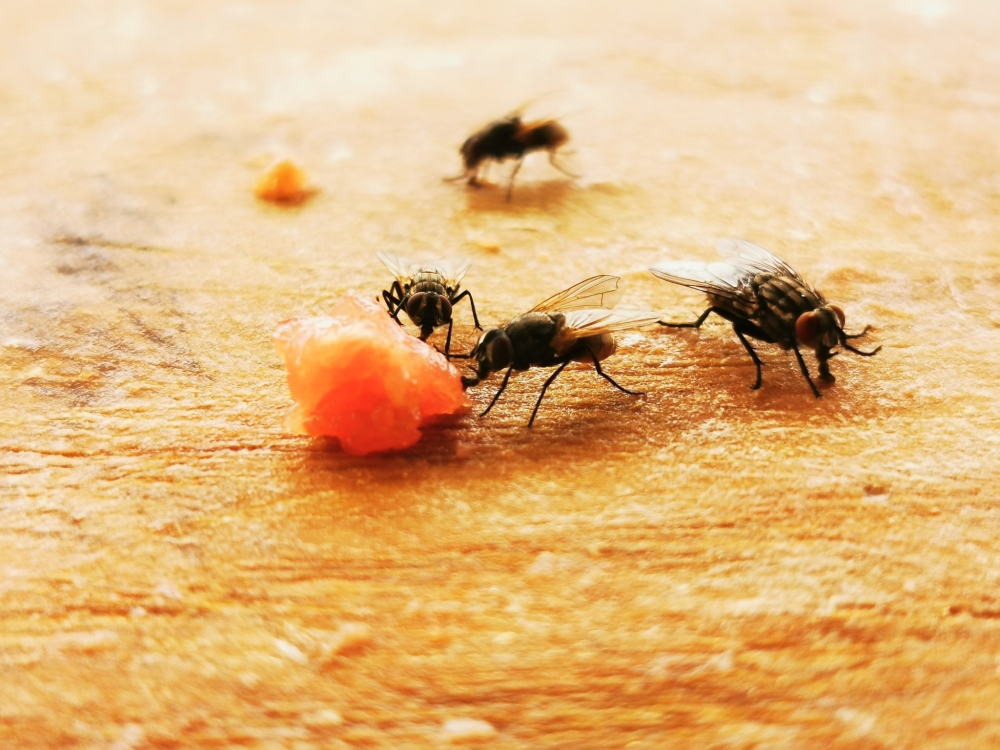
The species most people picture when they think of flies, and the one encountered most often in Singapore homes, F&B outlets, and rubbish collection areas. House flies have a greyish body around 6mm to 7mm long, with four dark stripes running along the thorax. They breed in decaying organic matter, refuse, animal waste, and food residue, and under local conditions they develop from egg to adult in as little as a week. Their constant movement between waste and food makes them the primary disease vectors among common flies, which is why many house fly pest control treatments focus as much on breeding sources as on the adults you can see.
Fruit Flies (Drosophila species)
Tiny tan or brown flies, roughly 3mm long, usually seen hovering around fruit, drinks, or bins. They breed in fermenting fruit, vegetable matter, beverage residue, mop heads, and the biofilm that lines drains. Bars, cafes, F&B outlets, and home kitchens see them most. Their short life cycle and high reproductive rate make them stubborn to clear unless the breeding sources are dealt with directly.
Drain Flies (Psychodidae)
Small, fuzzy, moth-like, drain flies are often mistaken for tiny moths. They breed in the organic film that accumulates inside drains, grease traps, and pipes that see little use. Common in F&B outlets, bathrooms, and any property with drainage problems or infrequently used floor drains, their presence usually signals a drain hygiene issue that needs addressing alongside any chemical treatment.
Bluebottle Flies
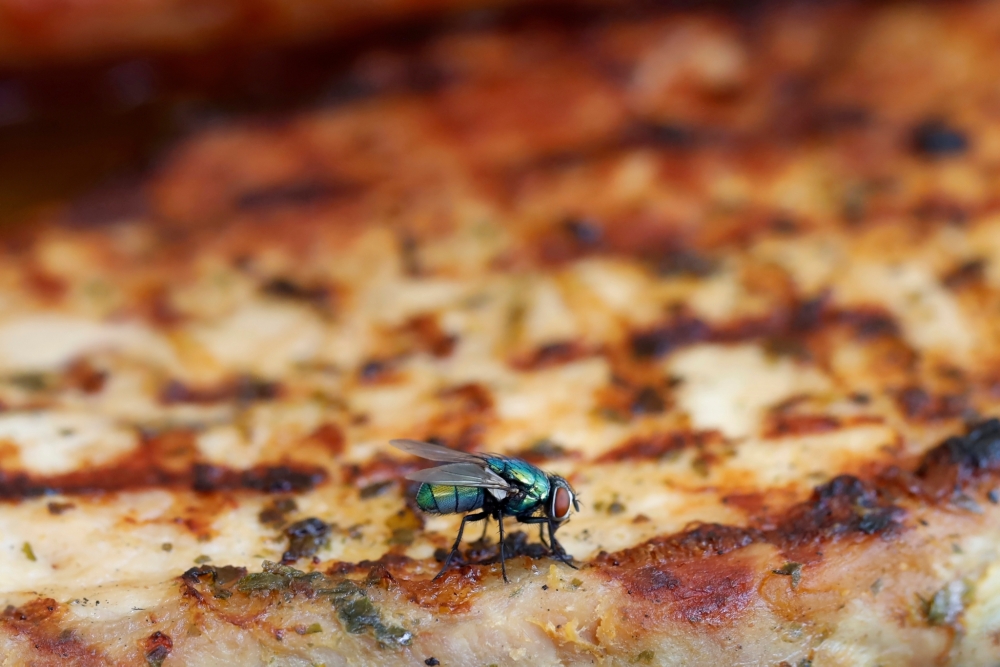
Larger metallic green, blue, or grey flies, also called as bottom flies are often heard before they are seen thanks to their loud buzzing indoors. They breed in dead animal matter, including rodent carcasses hidden in wall cavities or ceiling voids. A sudden indoor swarm of bluebottles frequently points to a concealed carcass that has to be located and removed as part of treatment. They turn up more often in industrial settings, warehouses, and properties near vegetation, refuse areas, or outdoor waste disposal zones.
Phorid Flies and Other Small Flies
These small, humpbacked flies are easily confused with fruit flies, though their distinctive scuttling movement sets them apart. They breed in decaying organic matter, including damp food debris trapped under equipment and inside broken drains. In commercial kitchens and food processing environments, phorid flies often reveal hidden moisture or organic build-up that routine cleaning has missed.
Signs You Need Professional Pest Control For Flies
Most fly problems give themselves away well before they become an emergency. The signs below are worth treating as a checklist: if several apply, the issue has likely moved beyond what cleaning and over-the-counter products can resolve, and pest control for fly infestations becomes the more sensible route.
- Flies appear frequently in kitchens, food preparation areas, or dining spaces despite regular cleaning.
- Clusters gather near windows, light fittings, bin areas, or drains.
- Maggots or larvae are visible in bins, drains, or organic debris.
- Dark fly specks, the faecal spots flies leave behind, mark walls, ceilings, light fittings, or windows.
- Buzzing comes from inside walls or ceiling voids, which can indicate hidden breeding or a concealed carcass.
- Customers, staff, or household members complain repeatedly about fly activity.
- Flies return within days of self-treatment with sprays or zappers.
For commercial operators, the threshold is lower. Any visible fly activity during service hours or an inspection could sometimes be reason enough to bring in professional support, because by the time flies are noticeable to a customer or an auditor, the underlying population is already established.
Why DIY Fly Control Rarely Solves the Problem
There is nothing wrong with reaching for a can of spray or a strip of fly paper first. For a single fly that wandered in, or a brief flare-up after a missed bin collection, those measures often do the job if you’re targeting just one fly.
Most DIY products target the visible adult flies and leave the breeding sources untouched. Because each female can lay hundreds of eggs and the cycle from egg to adult is so short in Singapore’s climate, a population replenishes faster than spraying can suppress it. You clear the flies you can see, and the next generation is already developing in a drain or under a piece of equipment.
The most common missteps often follow a pattern:
- Supermarket aerosols kill the flies in the air but do nothing to interrupt the breeding cycle underneath.
- Electric zappers run without addressing the source, and in some cases draw additional flies towards the property.
- Sticky papers and traps capture a fraction of the population while breeding continues unchecked.
- Bleaching a drain once treats the surface but leaves the biofilm and ongoing organic build-up that drain flies depend on.
- Cleaning the obvious bin area misses secondary breeding zones such as floor drains, mop heads, and the gaps beneath equipment.
Professional fly pest control works differently because it starts in a different place. Rather than chasing adults, treatment begins by identifying the species and locating where they breed, then combines targeted treatment with sanitation and proofing so the population cannot simply rebuild. Done this way, it’s also the more cost-effective option over time, a treatment built around the source doesn’t need repeating the way sprays and traps do.
What Professional Pest Control Services For Flies Involve
No two fly problems call for exactly the same response, which is why effective pest control services begin with assessment rather than a fixed package. A fruit fly infestation in a bar, a bluebottle problem in a warehouse, and a drain fly issue in a commercial kitchen each demand a different combination of methods. The work below is drawn on selectively, matched to what the inspection actually finds.
Inspection and Source Identification
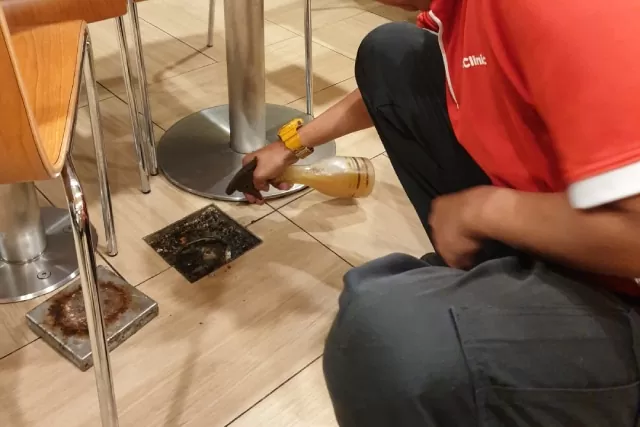
Every programme starts with a detailed inspection. A technician identifies the species present, locates active breeding sites, and assesses the conditions allowing the infestation to persist, from drainage faults and waste handling practices to structural gaps and nearby bin centres.
Residual Spraying
Water-based insecticide is applied to surfaces where flies land and rest: doors, windows, walls, bin areas, and food preparation zones. This method eliminates adult flies on contact and continues working for a period after application, helping to prevent reinfestation between visits.
Misting
Where heavier or more widespread fly activity is present, misting delivers an immediate knockdown across a larger space. It is particularly suited to back-of-house F&B areas, warehouses, refuse rooms, and commercial environments where fly pressure is urgent or the affected area is large.
Fly Killer Machines
Commercial fly killer units are installed in high-traffic areas to provide continuous, ongoing control. Used primarily in F&B and commercial settings, they manage adult fly activity in areas where flies are persistently present and visible to customers or staff.
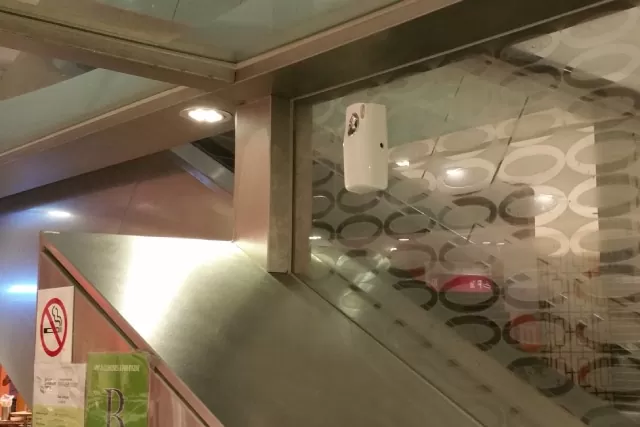
Fly Control Dispensers
These dispensers release Pyrethrum, a natural insecticide derived from chrysanthemum extract, into the air to control flying insects. They are well suited to food establishments, hotels, and accommodation settings where ongoing, low-disruption fly management is a requirement.
Where appropriate, technicians will also recommend sanitation improvements and structural adjustments that help reduce fly pressure over the longer term.
Pest Control for Flies in Residential, Commercial and Industrial Properties
The principles of fly pest control hold across every setting, but the demands of a home, a restaurant, and a food processing plant are not the same.
Residential Properties
Pest control for residential homes often centres on finding and treating breeding sources inside the property: bins, drains, and pockets of organic debris. Residual sprays handle fly resting zones, refuse chutes and shared waste areas are larvicided where relevant, and the technician will point out sanitation and proofing improvements worth making. The trigger for calling in professional help at home is usually something specific: Persistent fruit flies in the kitchen, drain flies in a bathroom drain, a sudden indoor cluster of large flies suggesting a concealed carcass, or house flies repeatedly entering from corridors and bin chutes all warrant a professional inspection. Inspection, treatment, and any follow-up monitoring are matched to that particular issue.
Commercial and F&B Properties
When it comes to pest control for commercial properties, a single treatment rarely resolves the issue for long. Fly activity in F&B outlets, hotels, supermarkets, and warehouses is persistent enough to warrant scheduled servicing rather than one-off visits, with fly killer unit monitoring, drain treatment, and documented records supporting ongoing hygiene compliance and audit requirements.
Industrial Properties
Pest control services for industrial properties in Singapore brings a different scale of complexity: larger floor areas, multiple loading bays, waste handling zones, and constant movement of materials. Food processing facilities, central kitchens, logistics hubs, manufacturing premises, and refuse or recycling facilities all fall into this category. Programmes here tend to integrate perimeter treatment to reduce the fly pressure entering the building, fly light units placed strategically at entry points and back-of-house zones, larviciding for drains and external waste areas, and scheduling coordinated around operational hours and clean-down cycles. Reporting and trend tracking support HACCP, ISO, and audit requirements, which is why a structured, ongoing programme serves these sites far better than reactive call-outs.
What to Expect When You Book Pest Control For Flies with PestClinic
Engaging professional help is more straightforward than most people expect, and you do not need to know which treatment method your property requires before getting in touch. That determination is made on site.
The Enquiry and Inspection
When you contact us, the first conversation is about understanding the situation, not pushing a service package. It helps to have a few details ready: the type of property, where flies are being seen, how long the problem has been going on, anything you have already tried, and any operational considerations for a commercial site. From there, we arrange a visit at a time that suits the household or business. A PestClinic NEA-licensed specialist inspects the property thoroughly, identifying the species, locating breeding sources, and assessing the structural and operational factors behind the infestation.
Treatment on the Same Visit
Our specialists carry out inspection and treatment on the same visit, so there is no waiting period between identifying the problem and acting on it. Once the inspection is complete, the technician explains the findings clearly and carries out a treatment plan built around what the property actually needs, drawing on residual application, fogging, larviciding, fly light units, and proofing as the situation calls for. For commercial and industrial properties, this includes a recommended servicing frequency to keep the problem controlled over time.
Preparing for the Visit
A little preparation lets technicians reach the resting and breeding zones that matter most. Ahead of the appointment:
- Empty bins and clean refuse areas so larvicide and residual products can reach the surfaces themselves.
- Clear food preparation areas, seal food in containers, and cover exposed kitchenware.
- Provide access to drains, gully traps, and floor drains by moving any storage around them.
- Cover or relocate aquariums, and make arrangements for pets during treatment.
- Where the property is a commercial site, arrange treatment outside operating hours if possible.
The technician will confirm any specific preparation your property needs before the day itself.
After Treatment
Setting realistic expectations matters, so that normal post-treatment activity is not mistaken for failure. Adult fly numbers fall noticeably in the period following treatment, though some flies may remain active for a while as the residual products continue to work and the breeding cycle is interrupted. Larviciding takes effect progressively, as eggs and larvae fail to mature, so the fuller decline in population builds over the following weeks. It also helps to avoid cleaning treated surfaces straight away, since the residual products need time to act.
Because outside pressure from bin centres, neighbouring units, and vegetation never fully stops, commercial properties in particular benefit from scheduled servicing rather than a single visit. Where appropriate, we follow up to confirm the treatment is holding and adjust the plan if anything needs changing.
How to Get Rid of House Flies and Prevent Reinfestation
Professional treatment clears an established problem. Keeping it clear depends on what happens between visits, and the most reliable way to get rid of house flies for good is to remove the conditions that let them breed in the first place. The measures below work best alongside professional fly pest control, not as a replacement for it.
- Empty bins regularly and check that lids close fully every time.
- Wash bins and lids periodically to clear the organic residue and odour that draw flies in.
- Seal food waste and dispose of it daily, which matters most in F&B settings.
- Clean drains and gully traps with enzymatic or biological cleaners that break down biofilm.
- Wipe down surfaces, fruit bowls, and preparation areas frequently.
- Fit fly screens on windows, doors, and ventilation openings where it makes sense.
- Maintain external areas, including planters, pet feeding spots, and outdoor bin zones.
- Address plumbing leaks, blocked drains, and moisture problems promptly, since damp organic matter is where many fly species begin.
Commercial operators have a few more levers: training staff on waste handling, setting regular drain maintenance schedules, and investing in structural proofing such as air curtains and self-closing doors. None of these eliminate the need for professional treatment, but together they make reinfestation far less likely and treatment far more durable.
Why Choose PestClinic for Pest Control in Singapore
Fly problems escalate quickly. Acting early keeps the health risk, the disruption, and the cost significantly lower than waiting for the infestation to declare itself.
With over 30 years of combined experience, our NEA-licensed specialists identify fly species accurately, locate breeding sources, and apply targeted treatments across residential, commercial, and industrial properties.
The cheapest quote is rarely the most cost-effective. A treatment that clears visible flies without reaching the breeding source invites the problem straight back, and the recurring spend on repeat call-outs usually outweighs the initial saving. Treatment built around the root cause costs less over time because it is designed not to be repeated.
Get in touch with PestClinic today to arrange a professional inspection.