Few pest problems are as quietly demoralising as bed bugs. You strip the bed, wash everything on the hottest setting, and wake up days later to the same row of bites along your arm. By the time most people start paying attention to prevention, they’ve usually already been through this once and the goal has shifted from “get rid of them” to “never again.” Effective bed bug control is not just about treating an active infestation; it also involves preventing these persistent pests from returning.
Bed bugs are among the most resilient pests around, and Singapore’s mix of travel, density, and warm indoor climates makes reinfestation a real risk rather than a rare fluke. This guide explains why infestations take hold here, how to catch the early signs before they spread, and the specific habits that actually keep bed bugs from coming back.
Why Bed Bug Infestations Happen in Singapore
Bed bugs do not arrive because a home is dirty. They arrive because they are carried in, and Singapore offers them a near-ideal environment to spread once they do. The combination of frequent international travel, high-density living, and warm indoor climates means that a bed bug picked up in one location can establish itself in a new location within weeks.
The point was made vividly when a video of a severe bed bug infestation at an AMK Hub seating area went viral, spreading through local social feeds and prompting a wave of concern from residents who suddenly recognised the signs in their own homes. Cases like that are a reminder that bed bugs are not confined to neglected spaces. They turn up in well-kept flats and busy public areas alike.
They travel by hitchhiking. Luggage returning from a trip, second-hand furniture brought in from a resale platform, delivery packages, and even clothing can all carry bed bugs or their eggs into a property. Once inside, they settle into the seams, joints, and crevices nearest to where people sleep or sit for long periods.
In Singapore, infestations are most commonly reported in:
- HDB flats and private condominiums, where shared walls and close proximity can allow spread between units.
- Serviced apartments and hotels, where high guest turnover constantly introduces new arrivals.
- Hostels, dormitories, and staff accommodation, where shared sleeping spaces significantly increase the risk.
What makes bed bugs escalate so quickly is a combination of biology and behaviour. They reproduce rapidly, with a single female capable of laying hundreds of eggs over her lifetime. They disperse across multiple hiding zones rather than clustering in one obvious spot. And many populations have developed resistance to the active ingredients in over-the-counter products, which is why retail sprays so often fail to make a lasting difference. Left unaddressed, a problem that started in one mattress can spread to the bed frame, adjacent furniture, and neighbouring rooms before it is ever taken seriously.
How Does a Bed Bug Look Like?
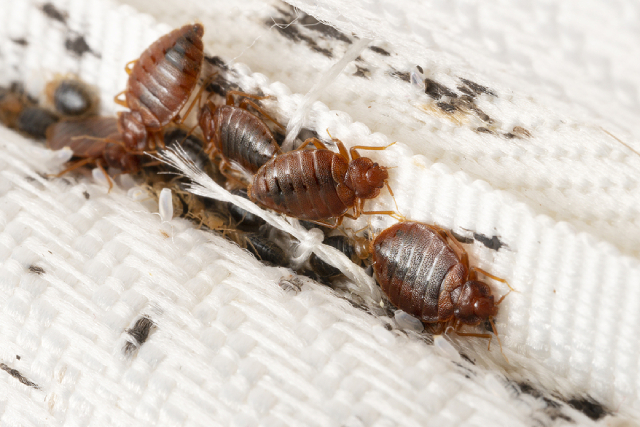
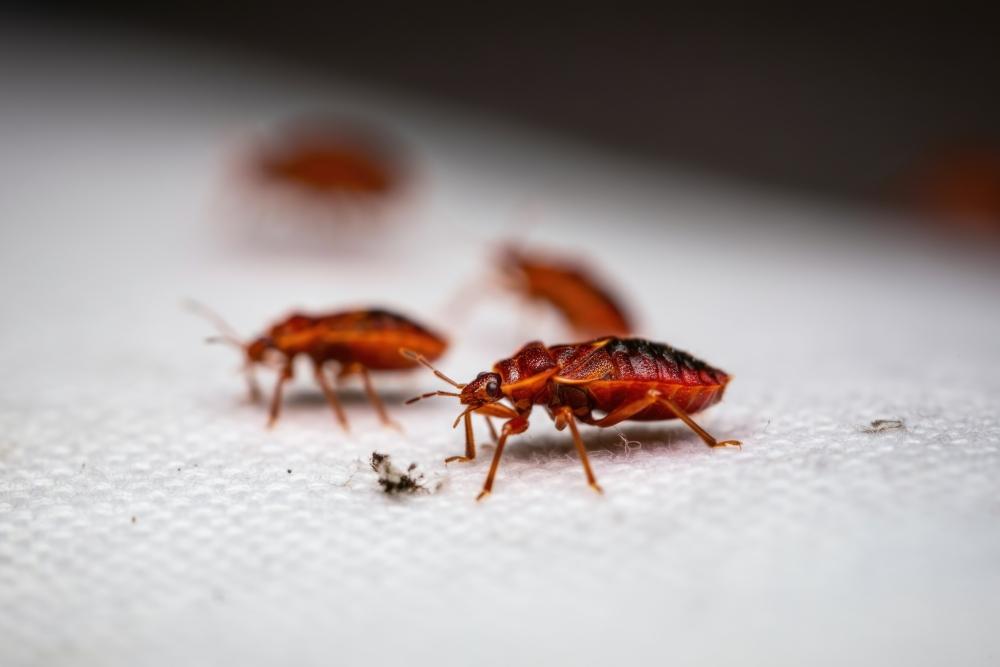
Prevention only works if you can catch activity early, which means knowing what a bed bug actually looks like rather than assuming the worst or dismissing the wrong signs. Adult bed bugs are roughly the size and shape of an apple seed, around 5mm to 7mm long, flat and rusty brown when unfed, swelling to a deeper reddish brown after feeding. Nymphs are smaller, paler, and almost translucent, while eggs are pearl white and pinhead-sized, usually laid in clusters tucked into concealed crevices.
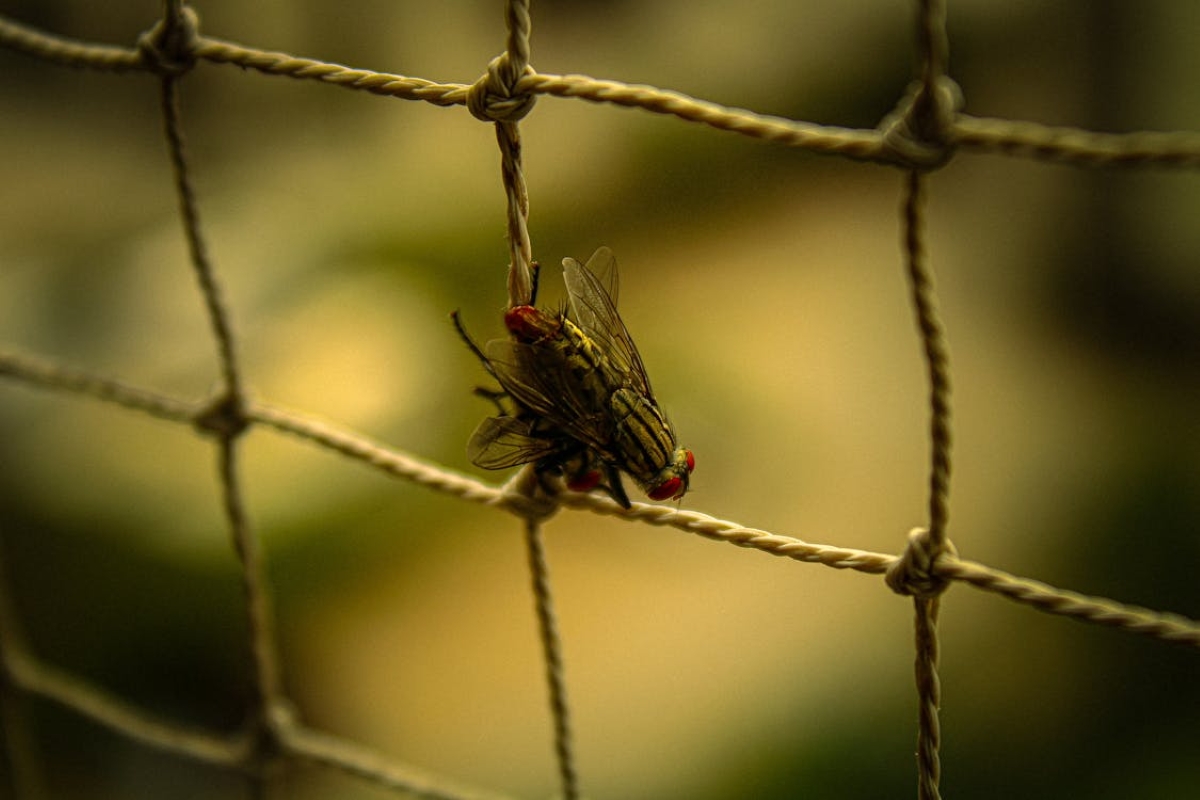
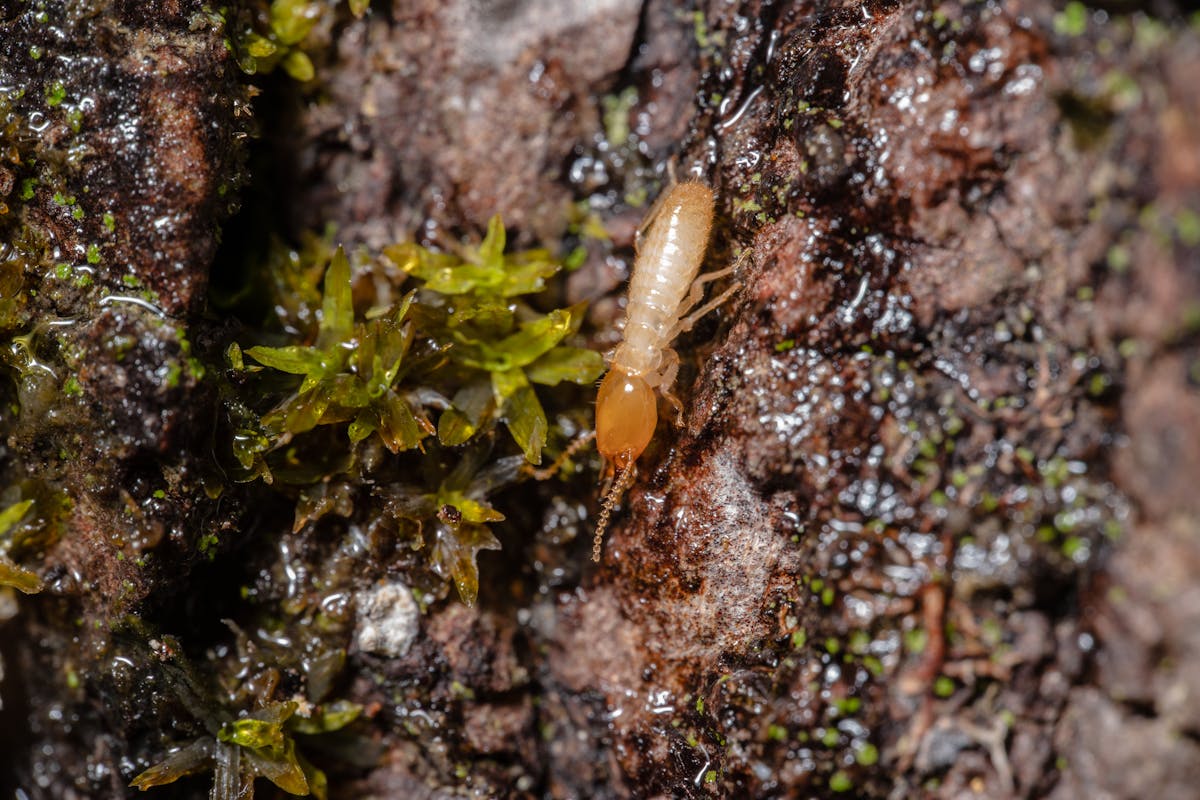
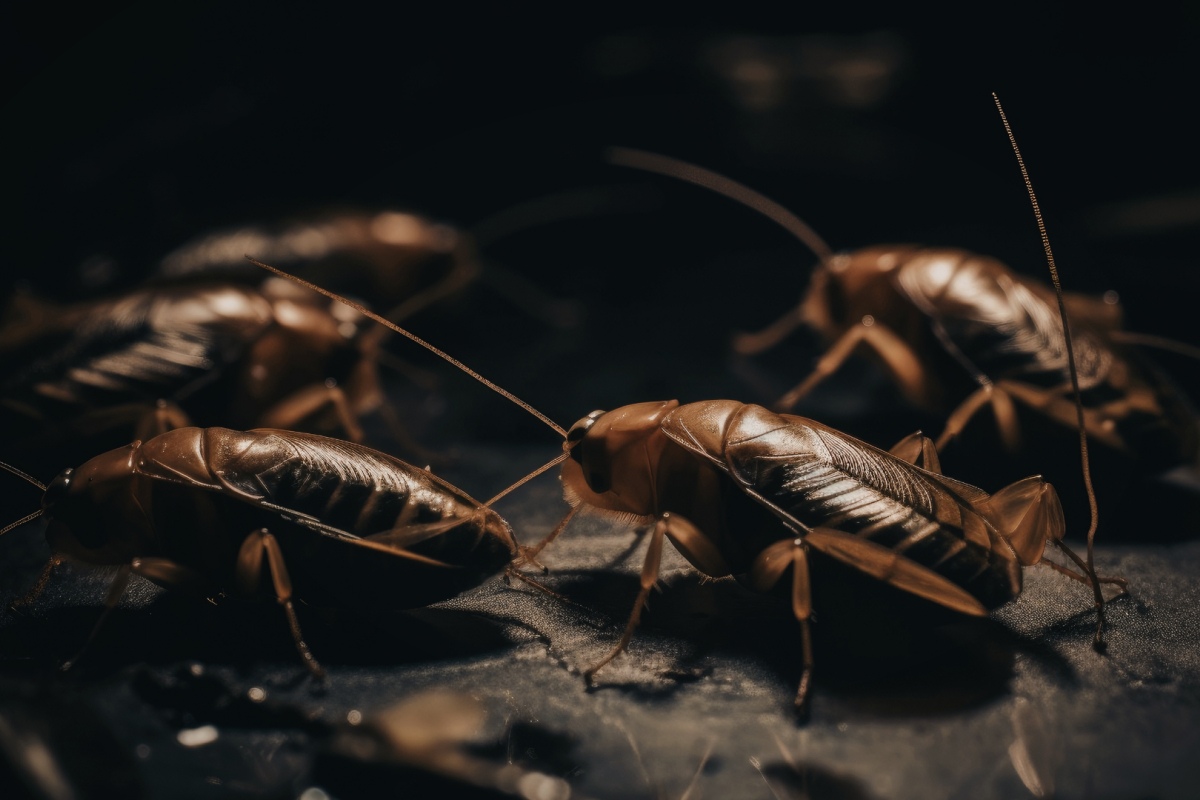
Bed bugs are frequently mistaken for other pests carpet beetles, fleas, ticks, and cockroach nymphs are all common misidentifications. If the culprit turns out to be roaches rather than bed bugs, our cockroach pest control page covers that instead, and we’ve gone into more detail on distinguishing pests in our guide on identifying 3 common mattress pests.
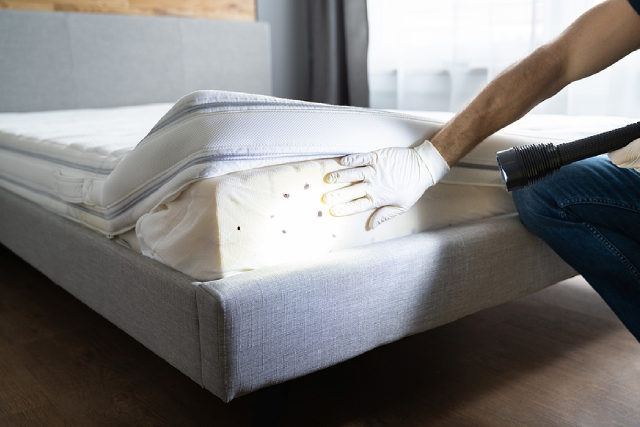
The most reliable places to check are mattress seams and piping, the joints of the bed frame and headboard, and along skirting boards near the bed.
Early Signs to Watch For
Bed bugs leave a recognisable trail of evidence, and most people notice several of these signs before they accept that the problem warrants professional help. Use the following as a checklist:
- Bites appearing in straight lines or tight clusters on exposed skin, often noticed first thing in the morning.
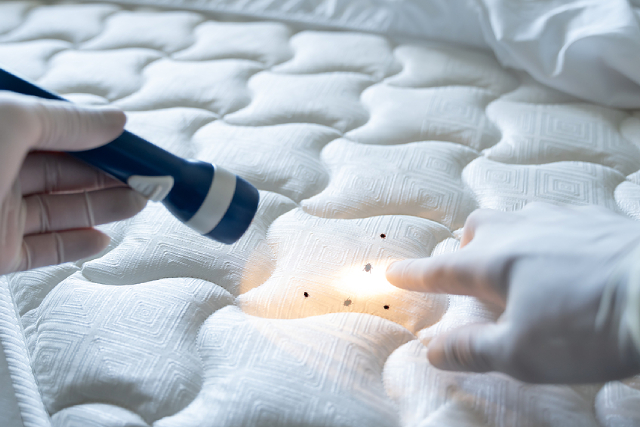
- Rust-coloured stains on bedsheets, mattresses, or upholstery, left by crushed bed bugs or their faecal matter.
- Translucent shed skins along mattress seams, in bed frame joints, or in furniture crevices.
- A musty, sickly-sweet odour in the bedroom that grows stronger as the infestation builds.
- Live bed bugs or pearl-white eggs visible in mattress folds, particularly along the piping.
- Bites or sightings that continue despite changing bedding, washing linens, and applying retail sprays.
- Activity spreading beyond the bed into adjacent furniture, walls, electrical fittings, or other rooms.
Here is the part worth being honest with yourself about. Many people delay because no single sign feels serious enough on its own, and the early evidence is easy to attribute to something else. But any one of these signs is reason enough to call in professional bed bug pest control before it spreads further. The infestation does not wait while you decide whether it qualifies, and the longer it runs, the more rooms and furniture it spreads to.
Why DIY Methods Rarely Eliminate Bed Bugs
For a stray insect or two, retail products can seem to do the job. The trouble begins when the problem is already established, because that is where over-the-counter methods consistently fall short.
The first reason is resistance. Many bed bug populations have developed measurable resistance to the active ingredients in common retail insecticides. A spray that kills the bugs you can see often has little effect on the wider population, which is why the bites return within days, even when the visible insects appear to be gone.
The second reason is reach. Surface sprays treat surfaces. Bed bugs shelter deep in mattress seams, bed frame joints, furniture crevices, and wall voids, well beyond the reach of a household spray. Treating what is visible leaves the bulk of the population untouched and free to repopulate.
The third reason is the eggs. Bed bug eggs are particularly resistant to standard insecticides, and they continue to hatch over weeks. Even a treatment that suppresses the adults will be undone as new nymphs emerge from eggs that were never affected. This is exactly why professional treatment is structured as a programme with a planned follow-up rather than a single visit, a point we return to below.
Some common DIY responses actively make things worse:
- Discarding an infested mattress without sealing it first can spread bed bugs through corridors, lifts, and into neighbouring units on the way out.
- Using foggers or bug bombs, which tend to scatter bed bugs deeper into walls and adjacent rooms rather than killing them.
- Repeated retail spraying, which suppresses surface activity just enough to mask the problem while untreated populations rebuild.
- Relying on essential oils, diatomaceous earth, or other home remedies that have limited evidence of working against an established infestation.
The hidden cost of waiting is the most important point of all. A single surviving fertilised female can rebuild a population within weeks, undoing months of effort and expense. We have written separately about the dangers of over-the-counter pest control products, and bed bugs are a clear example of why surface-level solutions tend to cost more in the long run than they save.

How to Prevent Bed Bugs From Taking Hold
Prevention comes down to controlling the two things that let bed bugs establish themselves: how they get in, and how easily they can hide once they’re inside.
Stopping them from getting in:
- When travelling, inspect hotel rooms before unpacking by checking mattress seams, headboards, and luggage racks.
- Keep luggage off the bed and floor in unfamiliar accommodation, and wash all clothing on a hot wash as soon as you return home.
- Examine any second-hand furniture, mattresses, or clothing carefully before bringing it indoors — this is one of the most common ways bed bugs enter a home.
- Be cautious with items picked up from void decks, resale platforms, or curbside “free” piles, which carry the same risk as second-hand furniture.
Making your home harder for them to settle in:
- Fit mattress encasements, which deny bed bugs their favoured harbourage along the seams and make any future activity far easier to spot.
- Vacuum mattresses, carpets, and upholstery regularly, paying close attention to seams and edges.
- Seal cracks in walls, skirting boards, and furniture joints to reduce the hiding spots available.
- Keep bedroom clutter down, since fewer undisturbed nooks means fewer places for bed bugs to settle.
- Do a periodic visual check of mattress seams and bed frame joints even without symptoms — catching one or two strays early is far easier than dealing with an established population.
In higher-risk environments such as hotels, hostels, dormitories, and staff accommodation, where constant turnover of people inherently increases the risk of reinfestation, routine professional inspections are a sensible safeguard on top of these habits.
When to Bring in a Professional
If you’ve confirmed the signs above and store-bought products haven’t resolved it, that’s the point where a professional inspection makes sense — not because DIY effort was wasted, but because an established infestation genuinely needs a coordinated approach that reaches every hiding zone and life stage. You can find out more about how our bed bug pest control service works, or get in touch if you’d like to discuss what you’re seeing.