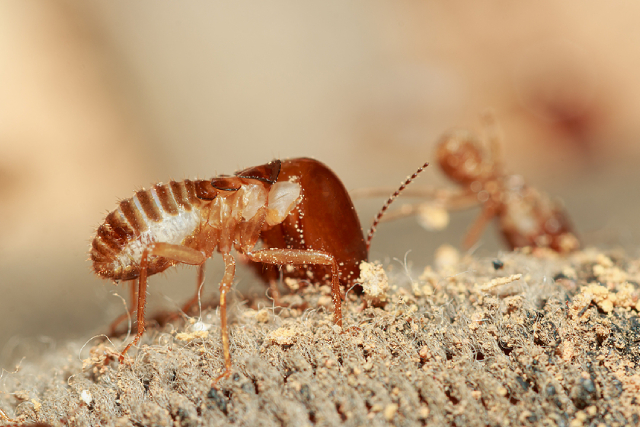
Flying termites are a familiar sight in Singapore, especially after rainfall or during warm, humid evenings. Homeowners often notice them clustering around lights, windows, or doorways and assume they are dealing with a sudden pest problem that appeared overnight. In reality, these insects are frequently misunderstood and rarely represent the problem on their own.
Their presence usually points to something more significant. Flying termites indicate that a mature termite colony exists nearby, either within the structure itself or in the surrounding environment. While a swarm may last only a short time, the colony responsible for it may have been active for months or even years without visible signs.
This article provides a detailed, practical guide to understanding what flying termites indicate, why they suddenly appear, the risks associated with their presence, and when professional assessment is necessary. By understanding the biology and behaviour behind flying termites, property owners can make informed decisions before concealed damage escalates into costly repairs.
Can Termites Fly?
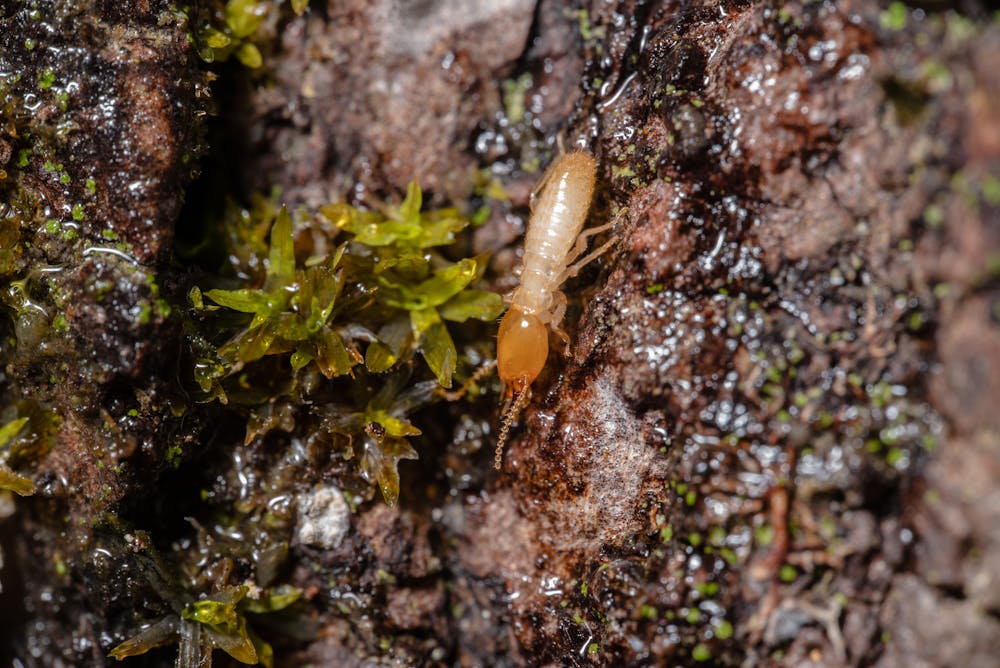
Yes, flying termites are the reproductive members of a termite colony and are commonly referred to as alates. Unlike worker termites that remain hidden within wood or soil, alates are produced only when a colony has reached sufficient maturity and stability.
Their sole purpose is reproduction and expansion. Once released, alates leave the original colony to find a mate and establish new colonies elsewhere. This process ensures the survival and spread of termite populations across suitable environments.
Swarming occurs over a short period, often within a single evening or a few days. During this time, hundreds or even thousands of alates may emerge simultaneously. After a brief flight, they shed their wings and search for suitable nesting sites.
Seeing flying termites indoors or close to a building should not be dismissed. While the swarm itself may be short-lived, it often signals that a well-established colony exists nearby and has already created access to structural timber.
Food, Habitat, and Reproduction of Flying Termites
Flying termites are easier to understand when you consider the colony they come from. Their appearance and behaviour are linked to how termite colonies grow and reproduce.
Food Sources
Flying termites themselves do not feed extensively. Their primary role is reproduction rather than foraging. However, the colony that produces them relies on cellulose as its main food source. Cellulose is found in wood, paper, cardboard, and other plant-based materials.
Worker termites break down cellulose and distribute nutrients throughout the colony. A colony that produces flying termites has already secured consistent access to food and is no longer focused solely on survival. This is why swarming indicates stability rather than early infestation.
Habitat
Flying termites originate from colonies that remain concealed. In Singapore, these colonies are most commonly subterranean, meaning they live underground and maintain contact with soil moisture. Colonies may nest beneath buildings, within garden soil, or under concrete slabs while accessing timber through hidden tunnels.
The flying termites themselves emerge from protected exit points, which may be underground or within structural voids. Their brief flight phase exposes them to light, air, and predators, which is why they swarm in large numbers and over short periods.
Reproduction Cycle
Swarming is a reproductive strategy. Flying termites leave the colony to establish new ones. Once wings are shed, pairs seek suitable environments where moisture, shelter, and food are available. Only a small fraction of swarmers successfully establish new colonies, which is why colonies produce them in large numbers.
The appearance of flying termites, therefore, indicates that the original colony has progressed beyond growth and into expansion.
Why Flying Termites Are Common in Singapore
Flying termites are frequently seen in Singapore, not because infestations are more aggressive, but because the local environment allows termite colonies to mature with fewer interruptions. Stable temperatures throughout the year mean colonies do not experience seasonal slowdowns that would otherwise delay growth or reproduction.
High humidity and regular rainfall further support this lifecycle. Moisture softens soil and wood, making it easier for colonies to expand feeding pathways and prepare for reproduction. Rain does not create termites, but it creates conditions that allow colonies to reach maturity faster.
Urban density also plays a role. Buildings are often constructed close together, with shared foundations, concealed soil contact points, and limited airflow. These factors allow colonies to spread quietly between properties. When flying termites appear, it often reflects long-term colony stability rather than sudden infestation.
This is why sightings tend to feel abrupt to property owners, even though the activity behind them has likely been developing over an extended period.
What the Presence of Flying Termites Indicates
The appearance of flying termites indicates that a colony has reached a reproductive stage. Colonies do not produce swarmers early. Swarming only occurs once sufficient population size, food access, and environmental stability have been achieved.
In practical terms, this means the infestation is already established. The timing of a swarm often coincides with peak colony strength rather than initial entry. As a result, flying termites should be interpreted as a signal of existing activity rather than an isolated event.
The swarm’s location provides further clues. Flying termites emerging from inside a property suggest internal colony access, while those entering from outside may indicate nearby external activity. This distinction affects both risk level and treatment urgency.
In Singapore, flying termites are frequently associated with subterranean termite colonies. These colonies remain hidden underground while feeding on timber through concealed access points. Swarming marks the point at which the colony begins expanding beyond its original boundaries.
Flying Termites vs Flying Ants: Key Differences
Flying termites are commonly mistaken for flying ants, particularly during swarm periods when both insects may appear around lights. While the two can look similar at a glance, confusing them can delay proper assessment and response.
|
Feature |
Flying Termites |
Flying Ants |
|
Antennae |
Straight |
Bent or elbowed |
|
Body Shape |
Uniform thickness from head to abdomen |
Narrow, pinched waist |
|
Wing Length |
Two pairs of wings equal in size |
Front wings longer than hind wings |
|
Wing Texture |
Fragile, easily shed after flight |
More durable, usually remain attached |
|
Swarming Purpose |
Colony reproduction and expansion |
Colony reproduction |
|
Risk to Property |
Indicates potential concealed structural damage |
Typically a nuisance with limited structural risk |
Misidentification matters because ants and termites pose very different risks. Ant activity is usually surface-level and short-term. Termite activity indicates concealed feeding and potential structural involvement. Treating a termite infestation as an ant problem often results in missed damage and delayed intervention.
When identification is uncertain, professional inspection provides clarity and prevents inappropriate treatment.
Where Flying Termites Are Commonly Seen
Flying termites are most often seen near light sources such as windows, doors, and ceiling fixtures. Light attracts swarmers and makes them more visible, even if the colony itself is located elsewhere.
Moisture-prone areas also influence sightings. Bathrooms, kitchens, and utility spaces create favourable microenvironments that allow termites to move undetected. These areas often contain concealed timber and access points connected to larger structural elements.
Building perimeters and soil contact zones are another common source. Foundation cracks, expansion joints, and concealed gaps allow termites to travel between soil and structure without visible signs.
Property type affects how flying termites appear. Landed homes are more exposed to soil-based activity, while apartments may experience infestations through shared structural components. Commercial spaces with complex layouts and higher moisture loads are also susceptible.
Do Flying Termites Cause Damage?
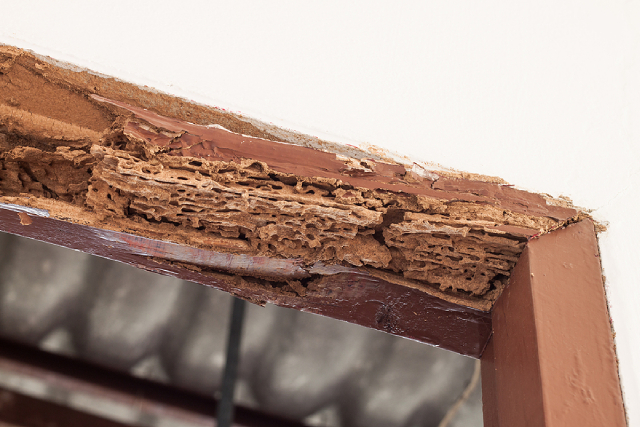
Flying termites do not cause damage themselves. Their role is reproductive rather than destructive. Structural damage is caused by worker termites that remain hidden within the colony.
The risk lies in misinterpreting the swarm as the problem. Eliminating visible flying termites does not affect the feeding population that continues to damage wood unseen. This disconnect often leads property owners to underestimate the severity of the infestation.
Swarming usually coincides with a phase of increased colony activity. While swarmers are harmless, the stage they represent is associated with higher feeding pressure and expansion potential.
Focusing solely on visible insects can allow concealed damage to progress unchecked.
What To Do If You See Flying Termites in Your Property
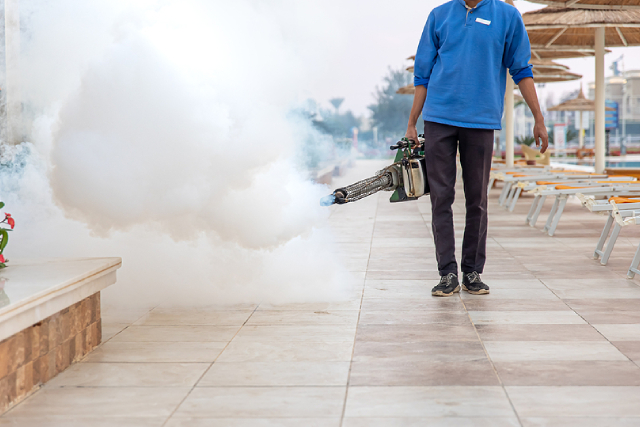
Killing or spraying flying termites may reduce the immediate nuisance, but does not address the underlying cause. Swarmers have already left the colony, and their removal does not disrupt feeding activity.
Immediate practical steps include reducing night lighting near windows, closing entry points, and limiting moisture where possible. These measures help reduce attraction but do not eliminate risk.
The key step is determining whether the swarm originated internally or externally. Flying termites emerging indoors suggest a higher likelihood of internal colony access and warrant prompt inspection.
Arranging a professional termite inspection allows the source, extent, and risk level to be assessed accurately before further damage occurs.
How Flying Termites Are Linked to Subterranean Termite Infestations
Flying termites are closely linked to subterranean termite colonies, which are responsible for the majority of structural termite damage in Singapore. These colonies establish underground nests and rely on soil moisture to survive.
Before swarming occurs, subterranean termites create extensive tunnel networks that allow them to access timber discreetly. These pathways remain hidden beneath floors, behind walls, and within foundations.
Swarming marks the point at which the colony begins expanding beyond its original footprint. This expansion increases the risk of damage spreading within the property or to neighbouring structures.
When flying termites are observed, it often indicates that subterranean activity has been present for some time. A delayed response allows colonies to continue growing and increases long-term repair costs. In such cases, subterranean termite treatment may be required as part of a broader control strategy.
Professional Assessment and Treatment Considerations
Effective termite control starts with accurate identification and assessment. Not all termite activity is the same, and treatment decisions should be based on the species involved, the colony’s level of establishment, and the property’s construction. This is why professional assessment is critical before any treatment begins.
A proper inspection goes beyond visible signs. Professionals focus on identifying termite entry points, timber contact areas, and concealed zones such as wall voids, flooring systems, skirting, and foundations. They also determine whether the activity is active or residual, and whether the source is internal, external, or potentially linked to neighbouring structures. This diagnostic process ensures that treatment targets the colony itself, rather than just addressing surface symptoms.
How to Get Rid of Flying Termites: Common Termite Control Methods
There is no single solution that works for every infestation. The most effective approach depends on the termite species, infestation severity, and the level of long-term risk exposure.
Baiting Systems

Baiting systems are commonly used for subterranean termite activity. Stations are installed in the ground or near active areas and contain a slow-acting bait that termites carry back to the colony.
Rather than killing termites on contact, baiting disrupts their growth and reproduction over time.This allows the bait to spread throughout the colony, including the queen, leading to a gradual collapse of the colony. Baiting is particularly effective for managing large or hidden colonies and is often paired with long-term regular inspection.
This method requires patience and ongoing checks, as colony elimination occurs over weeks or months rather than immediately.
Soil and Foundation Treatments
Soil treatments involve applying termiticides into the soil around a building’s foundation or beneath slabs. This creates a treated zone that termites cannot cross without being affected.
These treatments are commonly used for subterranean termite control in both landed properties and buildings with ground contact. When applied correctly, they act as a protective barrier that reduces the risk of termites entering or re-entering the structure.
Soil treatments may be used as a standalone solution or combined with baiting, depending on site conditions.
Localised Chemical Treatments
Localised treatments are used when termite activity is confined to specific areas. Termiticides are applied directly to affected timber, voids, or access points to eliminate active termites.
This approach can be effective for small, contained infestations or as a supplementary measure alongside broader treatment strategies. However, localised treatment alone may not address the full colony if access points or nesting sites extend beyond the treated area.
Fumigation and Direct Wood Treatments
Fumigation is typically associated with drywood termite infestations. The affected area, or sometimes the entire structure, is sealed to allow a gaseous fumigant to penetrate deep into the timber.
This method targets termites that live entirely within wood and is useful when infestations are widespread or inaccessible to spot treatments. Because fumigation does not provide residual protection, it is often combined with preventive measures and follow-up inspections.
Monitoring and Preventive Programmes
In Singapore’s climate, termite control does not end with treatment. Ongoing monitoring is an important part of long-term protection, especially for properties with previous infestations or high exposure risk.
Monitoring programmes involve regular inspections, guidance on moisture management, and early-detection measures to prevent colonies from reaching reproductive stages. This proactive approach reduces the likelihood of future swarm events and extensive damage.
Why Professional Planning Matters
Incorrect or partial treatment often leads to recurrence. Treating visible termites without addressing the colony allows damage to continue unseen. Similarly, choosing an unsuitable method can disrupt termites temporarily without eliminating the underlying problem.
Professional planning ensures that treatment is aligned with the biology and behaviour of the termite species involved. It also accounts for structural factors, neighbouring risks, and long-term exposure rather than relying on short-term fixes.
Engaging experienced termite control professionals in Singapore helps ensure that both visible signs and concealed activity are addressed systematically, reducing the risk of repeated infestations and costly repairs over time.
How to Reduce the Risk of Future Termite Swarms
Reducing future swarm risk involves controlling the conditions that allow colonies to mature. Moisture management is essential. Addressing leaks, improving drainage, and maintaining ventilation reduces favourable environments.
Structural maintenance also plays a role. Sealing cracks, limiting wood-to-soil contact, and removing debris reduce access points and feeding opportunities.
Regular inspections provide early detection before colonies reach reproductive stages. In Singapore’s climate, this proactive approach is more effective than reactive treatment.
Long term monitoring supports early intervention and reduces the likelihood of repeated swarming events. When appropriate, professional termite treatment services in Singapore help manage ongoing risk and protect structural integrity.
Why Flying Termites Should Not Be Ignored

Flying termites are not the cause of infestation but a visible indicator of a deeper issue. Their presence reflects colony maturity and signals that hidden activity may already be affecting a property.
Understanding what flying termites represent allows property owners to respond with clarity rather than with urgency driven solely by visible nuisance. Early assessment prevents minor activity from escalating into extensive structural damage.
Professional inspection remains the most reliable way to accurately interpret and determine whether termite control measures or subterranean termite treatment are required. In Singapore’s environment, informed and timely action supports long-term property protection and reduces the risk of recurrence.