


| Latin Name | Formicidae |
| Length | Less than 5.4mm |
| Colour | Red, black |
| Common Sighting | Wall edges, crevices |
| Latin Name | Formicidae |
| Length | Less than 5.4mm |
| Colour | Red, black |
| Common Sighting | Wall edges, crevices |
Quick Facts on Ants
Ants are among the most common household pests in Singapore, often appearing suddenly and spreading rapidly across homes, offices, factories and F&B outlets.
Ant colonies are highly organised and can consist of thousands of ants working together to survive and expand. One of the main reasons ants are so difficult to control is because of their colony structure, which may include multiple queens. Within a colony, there are:
-
Queen Ants: Responsible for laying eggs and rapidly multiplying the colony.
-
Worker Ants: Their job is to forage for food, build trails and maintain the nest.
-
Soldier Ants: They protect the colony from threats.
Ants locate food by releasing pheromones that create chemical trails for other ants to follow. This is why leaving food exposed, even briefly, can quickly lead to an infestation that property owners can struggle to contain without a professional pest control solution.
Signs of Ant Infestations
It’s never fun to discover your house, office or commercial kitchen infested with these tiny creatures. After all, once their numbers get big enough, it’s hard to control and curb the situation, especially when you’re doing it alone.
There are a few signs you might pick up when your property has been affected by an ant infestation, namely:
You might have an infestation on your hands if you notice a lot of live ants. Should you discover them in areas where food is prepared, such as the kitchen, we recommend engaging professional ants pest control treatment immediately.
Another obvious indicator of a potential ant problem is ant trails entering and leaving your property. Some ant species have been seen to leave a pheromone trail that directs fellow ants from the colony to a food source.
A nest site may resemble a little mound of dirt or soil. You may also find a long trail of worker ants moving around the edges of walls or other parts of the home, in addition to entering tiny cracks in walls. These areas are usually harder to spot.
Commonly Found Ants in Singapore

1. Carpenter Ants
Carpenter ants nest in wood structures and trees and are often mistaken for termites. These ants, which may grow up to 17 mm in length, typically feed on honeydew and dead insects. While they do not consume wood like drywood termites, carpenter ants hollow it out to create nesting galleries, making ants pest control services necessary for long-term protection.
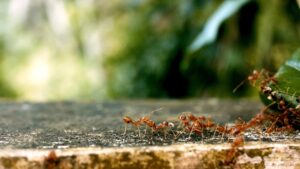
2. Crazy Ants
The irregular crawling pattern that these long-legged ants exhibit when startled gives them their name: crazy ants. Although they prefer sugar-based food, crazy ants eat a wide variety of food, from fruits to insects. Because they can nest in both dry and moist environments, crazy ants can quickly overrun kitchens and food preparation areas, leading to pest liabilities for business owners.

3. Ghost Ants
Also known as sugar ants, ghost ants are like an enormous sweet tooth: they are attracted to sweet beverages, cookie crumbs, sweets, and the like. If spills are not cleaned up, they will quickly create an ant trail within your property. Their size and multiple nesting sites make DIY solutions ineffective, calling for professional ants pest control treatment services.
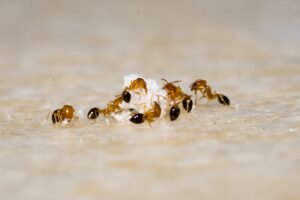
4. Pharaoh’s Ants
Pharaoh’s ants are yellowish-brown ants that feed on oil-based food as well as protein, like dead insects, fats, and meat. Their nests can be found nearly anywhere indoors and are a significant concern in hospitals, offices and food establishments. They are known for having multiple queens, which allows colonies to split and spread when disturbed, making professional ants pest control services critical.
How to Get Rid of Ants


Ants Gel Baits
The gel in gel baits is specially formulated with an insecticide and food items like sugar to eliminate ants and their nests. Typically, the sweet flavour of the bait attracts foraging worker ants. Intended for usage inside and around your property, the gel baits are first applied along the trail you have identified.
Afterwards, the worker ants will locate the bait and carry it back to their nest, where they will, in turn, feed to the queen. The bait will effectively eliminate her and thus put an end to future populations.
Insecticide Residual Spray
Insecticide residual spray is a water-based spray that is intended for indoor and outdoor use. The optimum place to apply this spray to provide long-lasting insecticidal protection is in cracks and crevices where insect activity has been observed. In addition, it can be used as a general spray to quickly knock down and destroy crawling insects like ants.
That said, DIY solutions are often not enough as they target only visible ants and not the colony. Engaging professional ants pest control services in Singapore ensures the correct products and methods are used for complete eradication.
Our Ants Pest Control Process
A structured and systematic approach is essential for effective ants pest control in Singapore. Our professional solutions focus on long-term results rather than temporary relief. This is how the process will go when you engage our treatment services:
Inspection & Assessment
First, we inspect the property thoroughly to identify ant trails, nesting areas and entry points. The ant species is identified to determine the most suitable treatment method.
Baiting & Targeted Treatment
Next, gel baits and targeted insecticides are applied near nests and foraging paths. Treatments are designed to eliminate both worker ants and the queen for complete colony control.
Application of Residual Spray & Barrier Protection
Residual sprays are applied to high-risk areas such as cracks, crevices, and door frames. This creates a protective barrier to deter future ant entry and reduce reinfestation risks.
Monitoring & Follow-Up
Follow-up inspections are scheduled to assess treatment effectiveness when necessary . Adjustments are made if necessary to ensure the ant infestation problem is fully resolved. Should additional work be required, a separate fee will be applicable.
Tips to Prevent Ants in the Home
Ants enter homes primarily in search of food, water and shelter. Preventing ant infestations in Singapore starts with simple daily habits that reduce attraction and access.
Book Our Professional Ants Pest Control Today!
While you may have a clean home, an ant infestation may persist. Given that ants are often present in large numbers and can expand their colony rather quickly, it’s important to move swiftly at the first indication of a potential infestation.
At PestClinic, our team of experts possess the skills and experience to successfully remove these ants from your abode or commercial property.
Frequently Asked Questions About Ants Pest Control in Singapore
How much does pest control for ants cost in Singapore?
The cost of pest control for ants in Singapore varies depending on the extent of the infestation and the treatment methods required. On average, ant control services range from SGD 150 to SGD 600. For more accurate pricing, it’s best to schedule an inspection with a professional pest control company like PestClinic, who can assess the situation and provide a tailored quote.
How long does ants pest control treatment take?
Most treatment services take between 30 minutes to 1 hour, depending on the extent of infestation and layout of the property.
How often should I schedule pest control for ants?
For preventive care, especially when it comes to pest control for commercial buildings, monthly treatments are recommended. Properties with recurring issues may require more frequent servicing.
Are ants pest control services in Singapore safe for pets and children?
Yes. Treatments are applied responsibly using approved products, with safety guidelines provided after service.
How soon will I see results after ants pest control treatment?
Reduced ant activity is often noticeable within a few days, with full colony elimination achieved through follow-up and monitoring.

